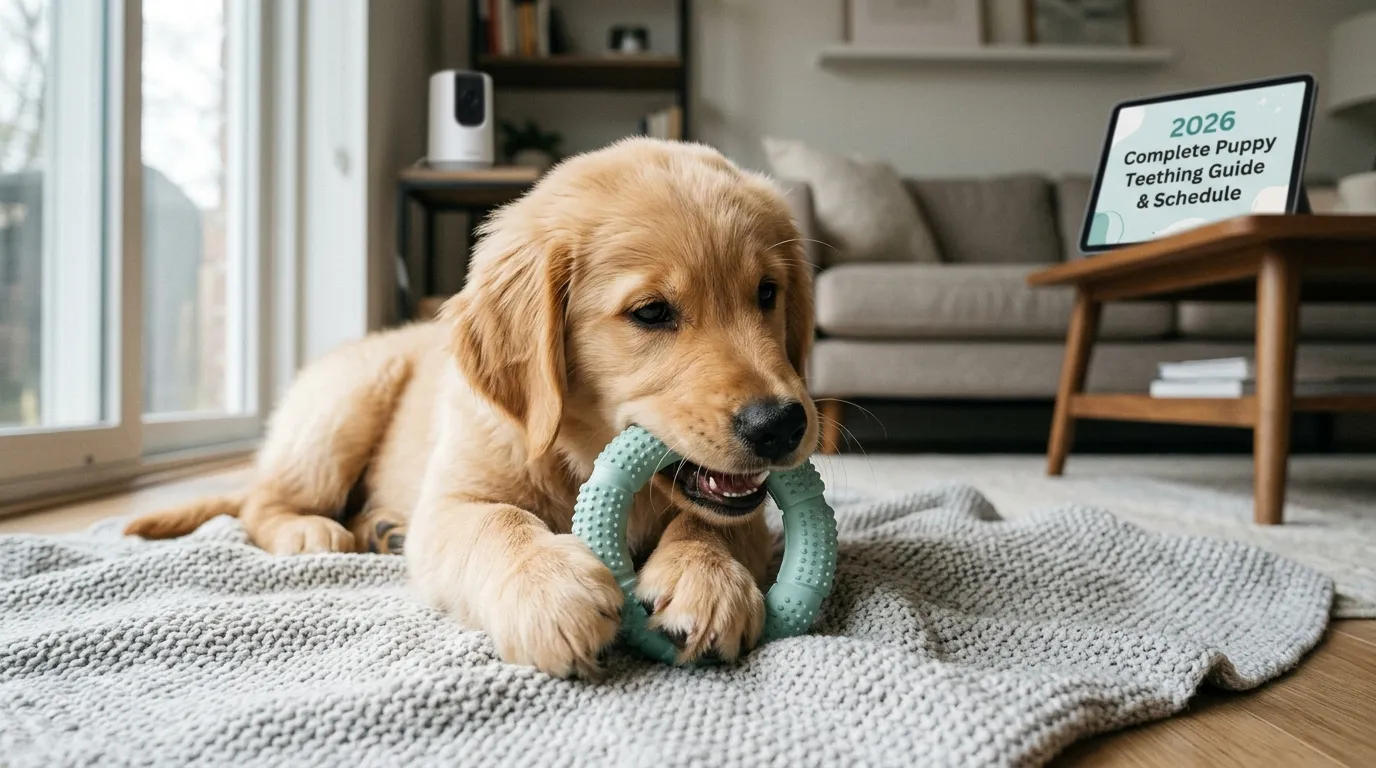
Could your home be an all-of-a-sudden minefield of gnawed table legs and withered sneakers? You are in the “land shark” phase now. If you’re dealing with a restless, chewing puppy, you are in good company — teething is one of the most physically uncomfortable stages for an evolving dog and one of the most testing for a new owner. The trouble is that left to his own devices you puppy’s suffering turns into destructive behavior that can damage your decor and your sanity.
We unravel the mystery of the “mouthy” puppy in this detailed 2026 guide. We’ll deliver to you a vet-approved, step-by-step teething puppy schedule and top tricks to relieve the gum pain in no time. Whether you are in the US, UK or Canada, this guide has your puppy’s baby teeth to adult pearly whites covered without turning your entire house into a chew toy. Find out exactly what’s going on at 12, 16 and 24 weeks — and how to channel that chompy energy into better habits today.
In this complete guide, you’ll discover:
- A week-by-week puppy teething timeline.
- The top 5 vet-approved soothing techniques.
- A daily schedule to manage chewing and pain.
- Essential product recommendations for 2026.
- How to differentiate between teething pain and behavioral biting.
Understanding the Biology of Puppy Teething
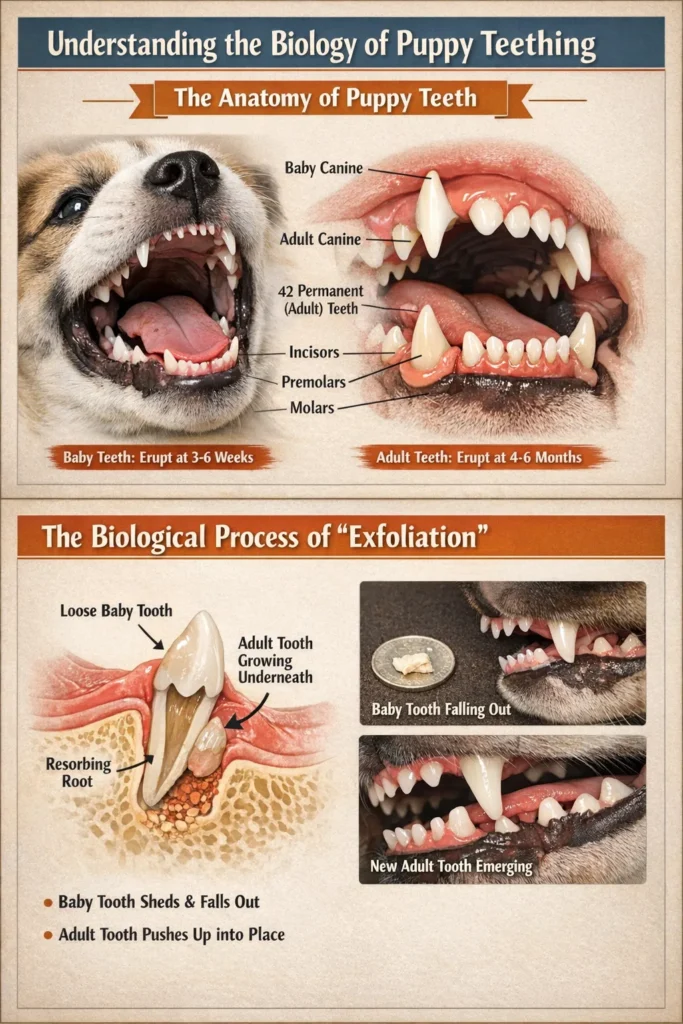
You must first understand the biological “why” behind those tiny, needle-sharp teeth to truly master these Best Teething Puppy Tips and Schedule for 2026. While we hear about puppy teething through chews, it’s actually a huge physiological moment for the pup with skull and jaw development at play as they prep for bigger-adult-scale teeth.
The Anatomy of Puppy Teeth
Puppies are born toothless. Around 3 to 4 weeks of age, their primary teeth—often called deciduous teeth, “milk teeth,” or “needle teeth”—begin to erupt through the gums.
- The Count: Puppies have 28 baby teeth. Those are incisors (for nibbling), canines (for tearing) and premolars (for grinding). Puppies, it is important to note, do not have molars; those come in with the adult set.
- The Texture: These teeth are very thin and razor sharp. Biologically, this is somewhat akin to helping puppies “learn” bite inhibition. When they nip a littermate too hard, the piercing pain makes the other puppy yelp and stop playing with them, helping the pup learn to moderate how hard they bite.
The Biological Process of “Exfoliation”
Around 12 to 16 weeks, the real “Shark Phase” begins. This is when the adult teeth (all 42 of them) begin to push against the roots of the baby teeth.
- Root Reabsorption: As the adult tooth grows, it triggers the body to reabsorb the root of the baby tooth.
- Loosening: Once the root is gone, the baby tooth serves as a cap that eventually falls out. These little white caps can end up on the floor or, more frequently, get swallowed by your puppy during eating (this is completely safe).
- Inflammation: This process leads to considerable gingival inflammation. The gums become reddish and swollen and hot. This heat is why puppies seek cold things — it’s biological cryotherapy.
Why the Obsessive Chewing?
Biologically, chewing serves two purposes:
- Pain Relief: The physical pressure of chewing helps “numb” the gums and assists the adult teeth in breaking through the gum line (erupting).
- Exploration:Since puppies don’t have hands their mouths are their most important sensory organ. During teething, their “oral urge” is at a high because they have their nerves really stimulated.
The 2026 Veterinary Insight: Retained Deciduous Teeth
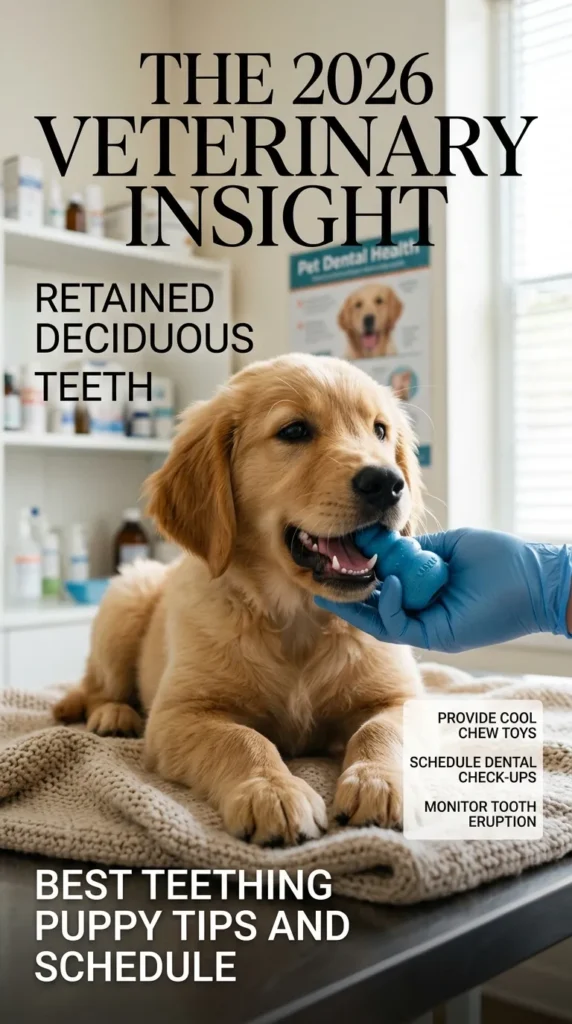
The opposite biological misfire is when the adult tooth erupts before the baby tooth has fallen out. This is known as a retained tooth. It can create overcrowding, trap food and permanently misalign jaws. Vets in 2026 suggest checking your puppy’s mouth weekly to watch for “double rows” of teeth, which can happen with some smaller breeds, like Yorkies or Chihuahuas.
The 2026 Teething Timeline:
The six-year Teething Timeline through your child’s “land shark” phase, is the VIP guide you need. Knowing precisely what is occurring in your puppy’s the mouth each month helps you stay one step ahead of the pain — and keep your home safe.
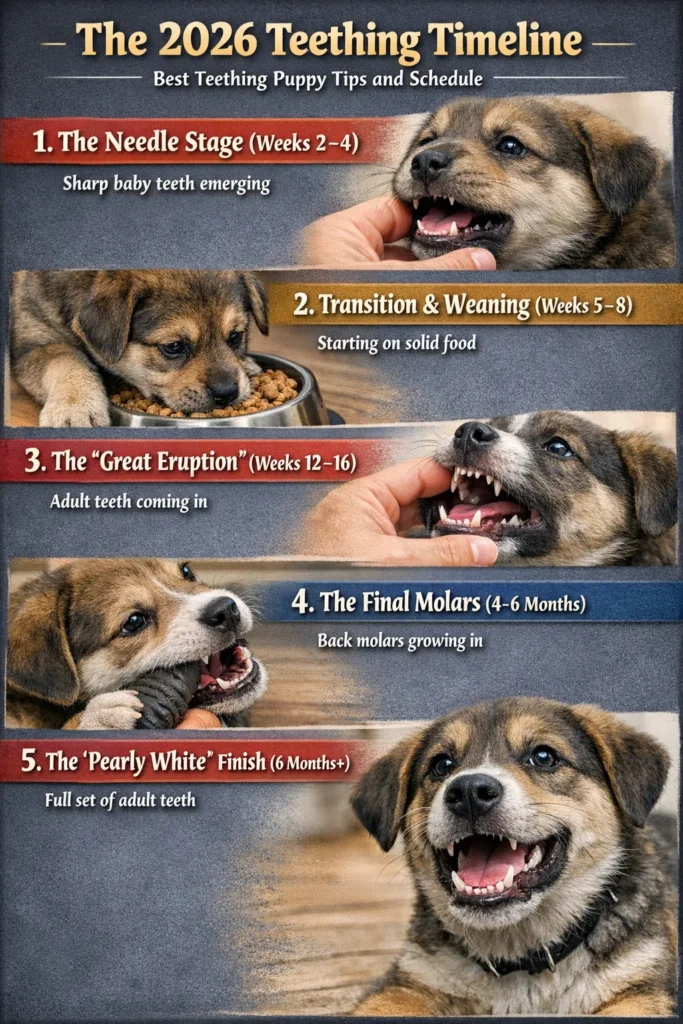
The Needle Stage (Weeks 2–4)
- What’s Happening: The first tiny, razor-sharp deciduous (baby) teeth begin to erupt through the gums.
- Biological Trigger: Puppies start “mouthing” their littermates. This is the biological start of bite inhibition training.
- 2026 Tip: You don’t need heavy-duty toys yet. Soft, plush toys or damp, twisted washcloths are perfect for these tiny gums.
Transition & Weaning (Weeks 5–8)
- What’s Happening: All 28 baby teeth should be in place by week 8. The mother dog will naturally start weaning because those sharp teeth hurt while nursing!
- The Shift: This is when puppies transition to moistened kibble.
- Care Focus: Start handling your puppy’s mouth now. Gently lifting their lips prepares them for future tooth brushing.
The “Great Eruption” (Weeks 12–16)
- What’s Happening: This is the most intense period. The baby teeth begin to fall out to make room for 42 adult teeth.
- The Symptoms: You will notice increased drooling, red/swollen gums, and an obsessive need to chew hard surfaces (like chair legs).
- 2026 Strategy: This is the peak time for frozen treats. The cold numbs the massive inflammation caused by adult molars pushing through the jawbone. [1, 2]
The Final Molars (4–6 Months)
- What’s Happening: The large molars at the back of the mouth begin to emerge. These are the “powerhouse” teeth.
- The Danger: Puppies at this age have stronger jaws and can accidentally swallow pieces of cheap toys.
- Pro-Tip: Switch to durable rubber toys (like the 2026-rated KONG series) to prevent choking hazards. [3]
The “Pearly White” Finish (6 Months+)
- What’s Happening: By 6 to 8 months, all adult teeth should be fully erupted.
- The Final Check: Look for retained baby teeth (when a baby tooth stubbornly refuses to fall out and creates a “double row”) This is common with smaller breeds and often requires the assistance of a vet during a spay/neuter appointment.
| Age Range | Teeth Count | Behavior | Best 2026 Tool |
|---|---|---|---|
| 0-4 Weeks | 0 to 28 | Nursing / Nipping | Soft Plushies |
| 2-4 Months | Falling Out | Intense Chewing | Frozen Lick Mats |
| 4-6 Months | Adult Molars | High Destruction | Hard Rubber Chews |
| 6 Months+ | 42 (Full Set) | Exploration | Daily Dental Wipes |
The “Soothe & Schedule” Method
Active Numbing, they stress, will be a vital skill to master by 2026. Don’t wait for your puppy to cry or gnaw on a shoe. At 2-hour intervals, use the “Soothe” tools — frozen textures, rubber resistance and calming scents — to keep gum inflammation at a minimum.
The Science of the “Soothe”
In 2026, the number-one piece of advice by far is freeze everything. If it’s fabric or rope, take two-week supplies and soak them in water (or low-sodium broth) and then freeze. The cold shrinks blood vessels, as a natural ibuprofen.
The Ultimate 2026 Teething Daily Schedule
This schedule is optimized for a 12-to-24-week-old puppy (the peak teething phase).
| Time | Activity | The “Soothe” Action |
|---|---|---|
| 7:00 AM | Wake Up & Potty | Start the day with a chilled silicone ring to calm morning gum heat. |
| 8:00 AM | Breakfast | Serve kibble soaked in water or goat milk to make it soft on sensitive gums. |
| 9:30 AM | Morning Nap | Provide a frozen plush toy in the crate to encourage self-soothing. |
| 11:30 AM | Active Play | Use a long cotton rope toy (dampened and frozen) for “tug” to massage molars. |
| 1:00 PM | Lunch / Snack | Give a frozen carrot or a “pupsicle” made of bone broth. |
| 2:30 PM | Training Session | Focus on “Leave It” using soft, high-value treats that don’t require heavy chewing. |
| 4:00 PM | The “Witching Hour” | Peak irritability time. Offer a heavy-duty rubber KONG stuffed with wet food. |
| 6:00 PM | Dinner | Softened food again. Check for any loose teeth that might make eating painful. |
| 8:00 PM | Wind Down | Gentle gum massage with a silicone finger brush to desensitize them to touch. |
| 10:00 PM | Final Potty & Bed | Ensure the crate is cool; heat can worsen the throbbing sensation of erupting teeth. |
3 Golden Rules of the Schedule
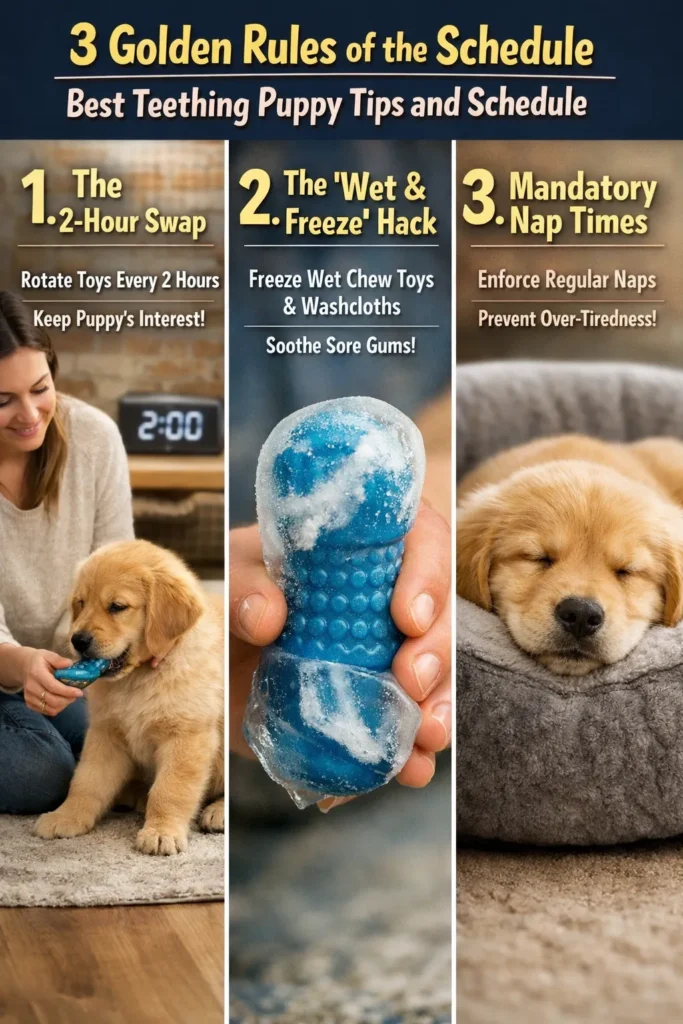
- The 2-Hour Swap: Puppies get bored of textures quickly. Swap a hard rubber toy for a soft frozen cloth every 2 hours to keep their mouth engaged.
- The “Wet & Freeze” Hack: In 2026, the #1 tip is freezing everything. If it’s fabric or rope, soak it in water (or low-sodium broth) and freeze it. The cold constricts blood vessels, acting as a natural ibuprofen.
- Mandatory Nap Times: Overtired puppies nip more. A teething puppy needs 18–20 hours of sleep. If they are “land sharking” your ankles, they likely need a nap, not a new toy.
Monitoring Progress
Make sure to check your puppy mouth once per week following this schema. Check for “double teeth” (the adult tooth growing behind the baby one). If it hasn’t budged in 5 days, but you can see the adult tooth there ready to pop through, time for a quick vet check.
DIY Frozen Treats
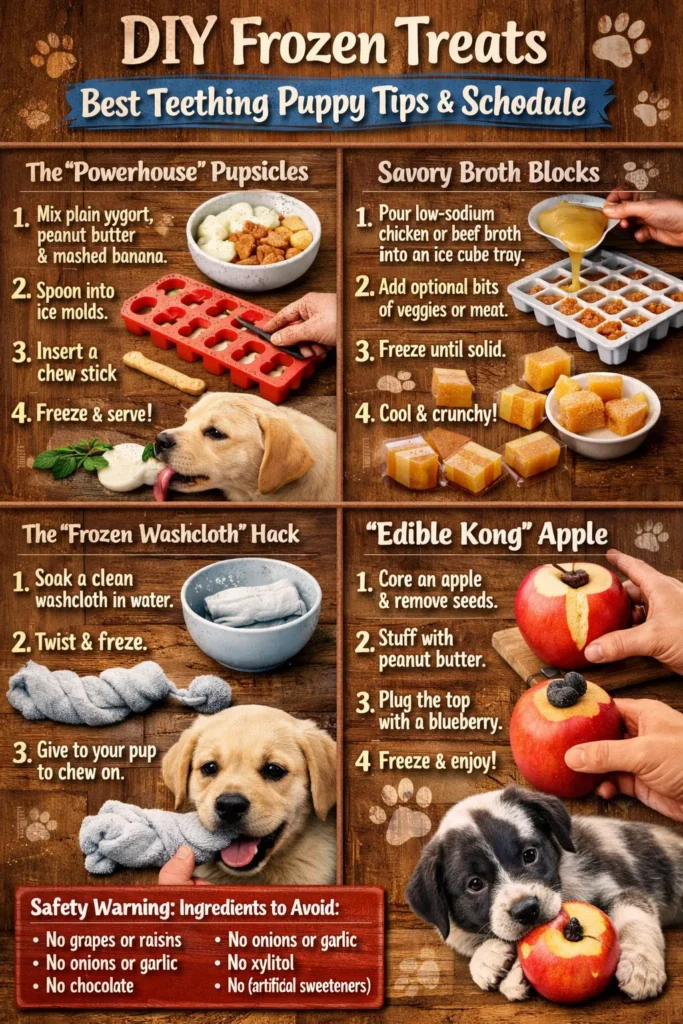
Your freezer should be your first line of defense to keep your pup comfy during the 2026 Best Teething Puppy Tips and Schedule These DIY treats are meant to be “soft-frozen”—hard enough to num the pain but soft enough so that they don’t chip those delicate puppy teeth.
1.
The “Powerhouse” Pupsicles
- Ingredients: 1 ripe banana, 1/2 cup plain Greek yogurt (xylitol-free), and 1/4 cup natural peanut butter.
- How to Make: Blend until smooth, pour into silicone molds or ice cube trays, and freeze for 4+ hours.
- Why it works: Bananas provide potassium, while the yogurt and peanut butter create a creamy, “slushy” texture that massages inflamed gums.
2.
Savory Broth Blocks
- Ingredients: Low-sodium or no-sodium chicken/beef bone broth (ensure no onion or garlic) and small carrot bits.
- How to Make: Fill an ice cube tray halfway with broth, drop in a few carrot bits, and freeze.
- Why it works: Hydrating and rich in minerals like collagen to support joint and bone development during growth spurts.
3.
The “Frozen Washcloth” Hack
- Ingredients: A clean, unbleached cotton washcloth and unsalted broth.
- How to Make: Soak the cloth in broth, twist it into a rope-like shape or tie a knot, and freeze for 2 hours.
- Why it works: The fibrous texture of the cloth acts like “floss” for erupting teeth, while the cold provides immediate anti-inflammatory relief.
4.
“Edible Kong” Apple
- Ingredients: One whole apple (seeds and core removed) and Greek yogurt.
- How to Make: Hollow out the apple, fill the center with yogurt, and freeze solid.
- Why it works: Provides a satisfying “crunch” as they reach the center, occupying them for up to 45 minutes.
2026 Safety Warning: Ingredients to Avoid
- Xylitol (Birch Sugar): Always check labels; even “natural” peanut butters can contain this highly toxic sweetener.
- Onions/Garlic: These can cause severe stomach pain and toxicity in dogs.
- Hard Ice Cubes: Use slushy blends instead, as solid ice can sometimes be too hard for fragile milk teeth.
- Grapes/Raisins: These are toxic to kidneys and should never be used.
Top 10 Teething Toys of 2026
The Nicaragua budge!Flaccid politician for the 2026 Best Teething Puppy schedule, the gear you use counts. By 2026, the emphasis has shifted to BPA-free medical-grade silicone and “smart” textures that massage gums without being hard enough to fracture fragile milk teeth.
The 2026 Top 10 Teething Toy Leaderboard
- KONG Puppy Binkie (Natural Rubber): The gold standard. Designed with puppy teeth in mind, it’s more gentle than the adult red KONG. Pro Tip: Fill with “Powerhouse Pupsicle” recipe and freeze
- Nylabone Puppy Chew Freezer Bone: Features a cloth center that you soak and freeze. It combines the hardness of a chew with the cold relief of an ice pack.
- Mammoth Cottonblend Flossy 3-Knot Rope: Pure cotton fibers act like dental floss for erupting molars. Soak in broth and freeze for a 2-in-1 treat.
- West Paw Zogoflex Toppl: A 2026 fan favorite for “aggressive” teething. It’s recyclable, dishwasher safe, and bounceable, making it a great redirection tool.
- Petstages Cool Teething Stick: This toy has a crunchy interior layer that mimics the sound of breaking ice—highly satisfying for puppies who crave “crunch.”
- BENEBONE Puppy 2-Pack (Bacon Flavor): Softer than the adult version, but still stand up to heavy chewers. The curvy “Wishbone” design lets puppers grip it easily with their paws.
- Silicone “Finger” Teethers: ([These aren’t for the pup to independently play with; these are to wear while rubbing their gums. Stuffed an special treat or something for them to lick off
- Chuckit! Hydro Roller: Designed to hold water and release it as the puppy chews. It’s the ultimate cooling tool for outdoor play in 2026.
- Outward Hound Invincibles Mini: A plush toy without stuffing. Since teething pups are destructive, this prevents “fluff-explosions” in your living room.
- JW Pet Hol-ee Roller (Small): A honeycomb-shaped rubber ball. You can stuff large fabric scraps or “Frozen Washcloths” inside it to create a complex puzzle toy.
2026 Safety Checklist for Toys
- The Thumbnail Test: If you can’t indent the toy with your thumbnail, it is too hard for a puppy and could break a tooth.
- Size Matters: The toy should be large enough that it cannot be swallowed whole but small enough for the puppy to carry.
- Supervision: Never leave a teething puppy alone with a new toy. Their jaws are surprisingly strong, and “invincible” toys are often just a challenge to them!
Redirection Training
In the Best Teething Puppy Tips and Schedule for 2026, the secret weapon to keep those teeth off your skin and furniture is redirection. At this point, your puppy is not being “bad” at all — they are just using their mouth to help them navigate physical pain.
The “Be a Tree” Method (2026 Update)
When those needle teeth hit your skin, the instinct is to pull away quickly. To a puppy, this looks like a game of “tug” with your arm. Instead:
- Freeze: Stop all movement immediately.
- The “Yelp” Myth: While some suggest a high-pitched “Ow!”, in 2026, trainers find this actually over-excites high-drive breeds (like Shepherds or Terriers).
- The Silent Walk-Away: If they keep nipping, quietly stand up and step over a baby gate. Removing your attention is the ultimate “punishment” for a social puppy.
The 3-Second Rule for Redirection
You have a 3-second window to change their focus before they forget what they were doing.
- Keep “Emergency Toys” Everywhere: Place a Top 10 Teething Toy in every room.
- The Swap: As soon as they mouth your hand or a chair leg, gently slide a cold toy into their mouth.
- The Praise: The moment their teeth touch the toy instead of you, use a calm, happy voice: “Good toy!” This reinforces that chewing the toy feels good (pain relief) and gets them love (social reward).
Dealing with the “Zoomies” Nipping
Most “aggressive” teething happens during the Witching Hour (usually 5 PM – 8 PM).
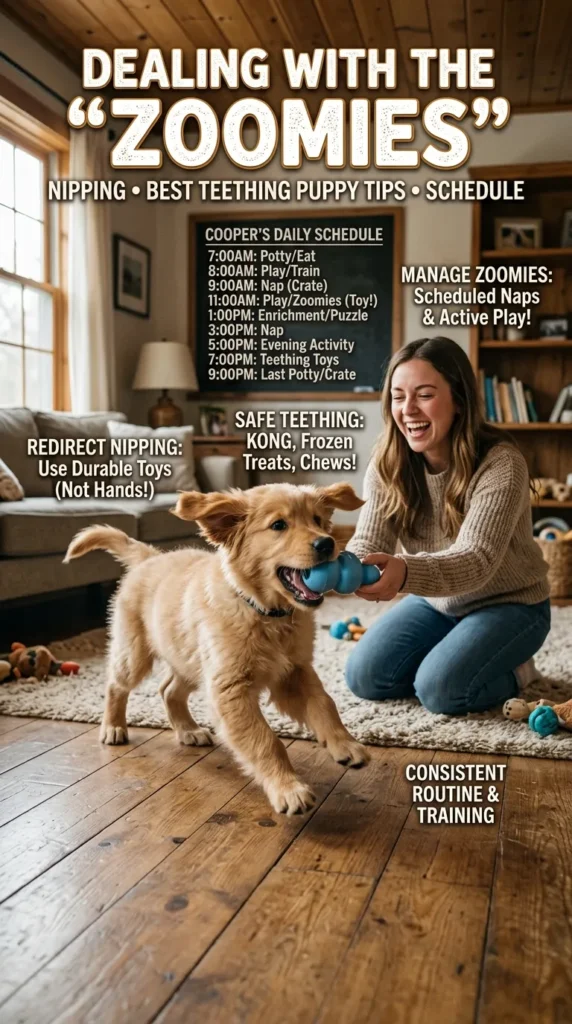
- Pro-Tip: If your puppy is frantically biting everything, they are likely overtired.
- The Solution: Do not try to train them in this state. Use the “Soothe & Schedule” Method to put them in their crate or playpen with a Frozen Washcloth.
What to Avoid in 2026
- Muzzle Grabbing: Never squeeze a puppy’s snout shut. This creates fear of hands and can lead to defensive biting later.
- Bitter Sprays alone: Sprays do not solve the problem; they deter it. If you use a bitter spray on a chair leg, you must provide a legal chew toy in the vicinity or they will just locate another piece of furniture to gnaw on.
Dental Hygiene 101
Starting Dental Hygiene 101 during the teething phase is one of the smartest moves pet owners can make and a great start for canine guardians in 2026. Although those baby teeth will eventually fall out, the willingness to let you touch their mouth has to remain.
The 2026 “Puppy-Step” Approach
In 2026, vets emphasize “fear-free” dental care. Don’t force a full brushing on day one.
- The “Lick & Learn” (Weeks 8-12): Squeeze a bit of poultry-flavored enzymatic toothpaste onto your finger. Let the puppy lick it off. By 2026, these pastes employ natural enzymes to digest plaque without scrubbing.
- The Gum Massage (Weeks 12-16): Use a silicone finger brush. Gently move the brush in circular motions along the gums. With their irritated mouth, this does actually feel like a massage, and strengthens trust during the “Great Eruption.”
- The 45-Degree Rule (6 Months+): When adult teeth come in, use a soft-bristled dog toothbrush. Hold the brush at a 45-degree angle to the gum line. This is the source of 80% of dental disease.
3 Essential 2026 Dental Tools
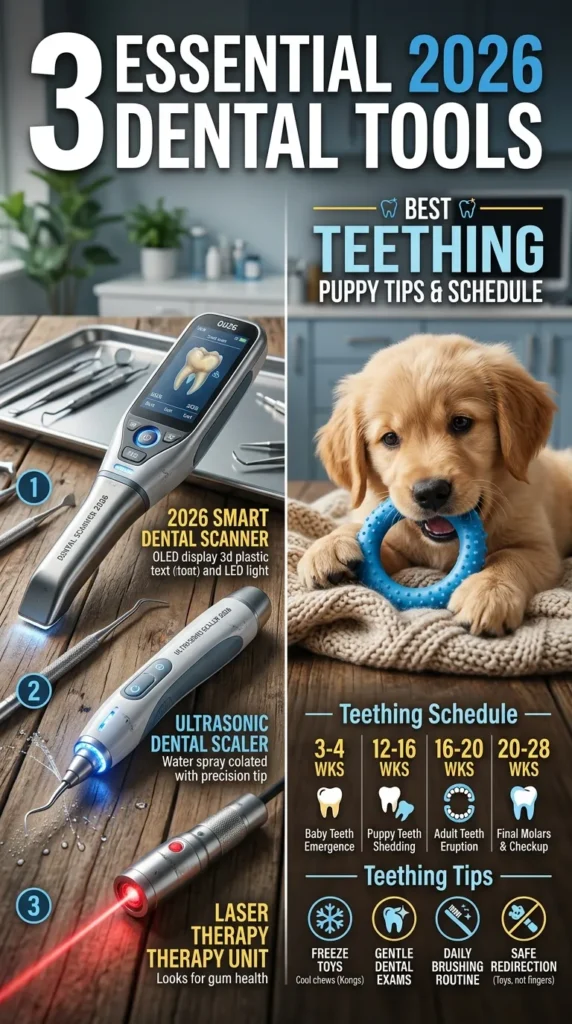
- Enzymatic Toothpaste: Never use human toothpaste (fluoride and xylitol are toxic).
- Dental Wipes: If your pup is too wiggly for a brush, 2026-grade textured wipes can “swipe” away the daily biofilm that turns into tartar.
- VOHC-Approved Chews: Look for the Veterinary Oral Health Council (VOHC) seal on products. In 2026, these are the only items scientifically proven to reduce plaque.
Why Early Hygiene Matters
Signs of periodontal disease are observed in 80% of dogs by age three. If you begin now, you’ll be saving thousands of dollars that would have been spent on your dog’s veterinary dental cleanings later and guarantee that “Pearly White” finish lasts a lifetime.
When to Call the Vet
While most teething is a natural process, there are specific “red flags” in the 2026 Puppy Care Guide that require professional intervention to prevent permanent jaw damage.
The “Double Tooth” Danger (Retained Deciduous Teeth)
The most common reason to call the vet is a retained baby tooth. This happens when an adult tooth erupts, but the baby tooth refuses to fall out.
- The Risk: This creates a “breeding ground” for bacteria and can push the adult tooth into a crooked position, causing painful rubbing against the roof of the mouth.
- 2026 Protocol: If you see two teeth in one spot for more than 5 days, schedule a check-up. Vets often remove these during the spay/neuter procedure.
Red Flags to Watch For:
- Extreme Lethargy: Teething causes discomfort, but a puppy should never be too tired to eat or play. If they seem “depressed,” it could be an infection.
- Excessive Bleeding: A few spots on a toy are normal. Active dripping or dark, purple-bruised gums are not.
- Refusing Food: If a puppy stops eating even softened/soaked kibble, their pain levels are too high and may require dog-safe anti-inflammatories.
- Bad Breath (Halitosis): Puppy breath is usually sweet. A “rotting” or foul metallic smell can indicate an abscess or an infected gum pocket where a tooth is struggling to break through.
- Facial Swelling: Any swelling under the eye or along the jawline could indicate a root infection.
The “Broken Tooth” Emergency
Many puppies chew things they’re not supposed to. If a baby tooth breaks and leaves a jagged root or exposed pulp (the pink/red dot inside the tooth), immediately call your vet. If the pulp beneath the enamel is exposed, it can be very painful, and even possible for the infection to travel down to each developing adult tooth.
FAQ
- How long does puppy teething last?
- Usually from 3 to 6 months of age.
- Can I give my puppy ice cubes for teething?
- Yes, small ice cubes or crushed ice can help numb sore gums.
- Why is my puppy bleeding while chewing?
- Mild spotting on toys is normal as baby teeth fall out.
- What are the best teething toys for 2026?
- Rubber KONGs and chilled thick ropes are top-rated.
- How do I stop my puppy from biting my ankles?
- Use the “stop and ignore” method or a high-pitch “yip” to signal pain.
- Is my puppy lethargic because of teething?
- Mild discomfort is normal, but extreme lethargy requires a vet visit.
- Do puppies get diarrhea when teething?
- Some stress-related GI upset can occur, but it’s usually mild.
- What is a “retained” baby tooth?
- When an adult tooth grows in but the baby tooth hasn’t fallen out.
- Can I use human numbing gels on puppies?
- No, many contain benzocaine which is toxic to dogs.
- How many teeth do adult dogs have?
- 4 2 permanent teeth.
- Should I pull a loose puppy tooth?
- Never; let it fall out naturally to avoid root damage.
- Does teething cause puppies to bark more?
- Irritability from pain can lead to increased vocalization.
Final Verdict
Dealing with the teething phase is a rite of passage for every dog parent. Although the 2026 landscape has a vast number of advanced toys and calming supplements available, consistency is still key. With the Simple Teething Puppy Schedule from this guide, you’re not just saving your furniture—is building a trust bond with your pet. And those nip-nips aren’t an act of aggression — they’re a plea for relief.
A lesson learned in 2026: redirection is the key. Don’t wait for your pup to discover a shoe — offer up a chilled toy before the discomfort becomes unbearable. The right mix of frozen treats and safe chew toys alongside an organized daily routine can transform these difficult months into a time of accelerated learning and development. Be patient, keep that “teething kit” handy and soon those little sharp puppy needles will be replaced by a healthy strong adult smile. Start your odyssey in the “Dog Care” realm — and make it pain-free!

Leave a Reply