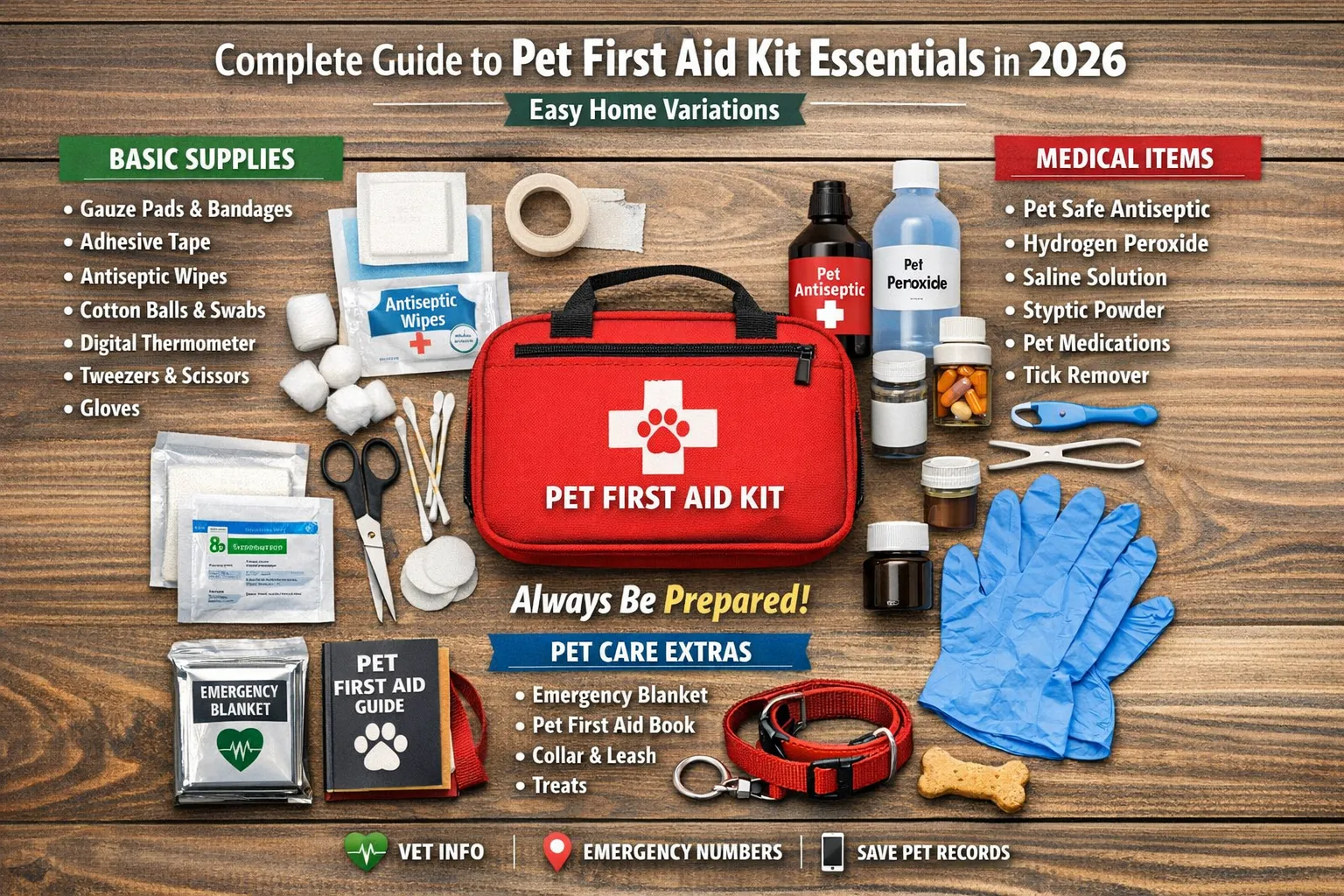
In terms of your pet’s safety, though, emergencies can occur when you least expect it—whether a small cut while on a walk, an acute allergic reaction or a sudden minor injury at home. Many pet owners are unprepared in these critical moments, finding themselves scouring the house for basic supplies or at a loss for what to do. That’s when a well-stocked pet first aid kit becomes not just useful — but vital.
Having a well-stocked pet first aid kit can be the difference between a speedy recovery or something more serious. It trains you to provide immediate assistance before seeking help from a veterinarian — so you can soothe pain, avoid infection, and stabilize your pet in emergency situations. The Best Pet First-Aid Kits from Dogs and Cats to Small Pets, every Responsible Owner Should have a Custom-Made Kit at home as well as travelling
As we head into 2026, the world of pet care is changing, with more and more owners becoming proactive about safety and preparedness. In this guide, you’ll find everything you need to create the perfect pet first aid kit — including must-haves, optional upgrades and simple variations that are possible in your own home.
By the end, you’ll be confident, prepared and ready to protect your furry friend in any situation.
In This Complete Guide, You’ll Discover
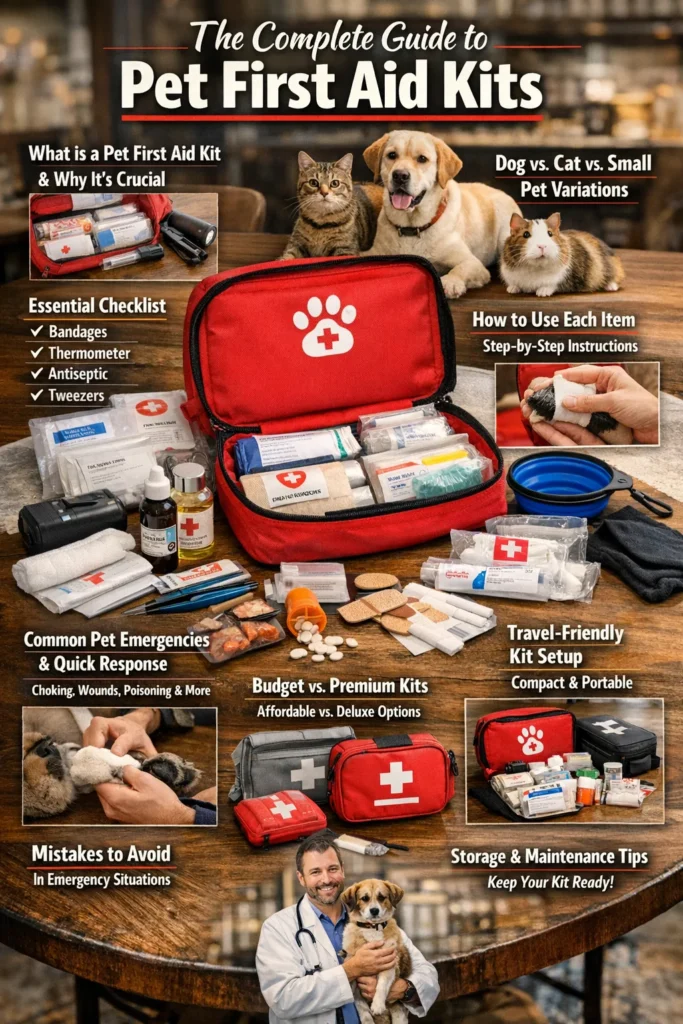
- What a pet first aid kit is and why it’s crucial
- Complete checklist of essential items
- Dog vs cat vs small pet variations
- How to use each item properly
- Common pet emergencies & quick responses
- Travel-friendly pet first aid kit setup
- Mistakes to avoid in emergency situations
- Budget vs premium kit options
- Storage & maintenance tips
- Vet-approved safety practices
What Is a Pet First Aid Kit?
A pet first aid kit is a collection of medical supplies and tools designed to handle minor injuries, stabilize serious conditions, and provide immediate care before professional veterinary treatment is available.
Unlike human kits, pet kits are tailored to animal anatomy, behavior, and risks.
Why Every Pet Owner Needs One
- Pets hide pain → injuries go unnoticed
- Faster response reduces complications
- Saves emergency vet costs
- Essential for travel & outdoor activities
- Provides peace of mind
Complete Pet First Aid Kit Essentials (Core Checklist)
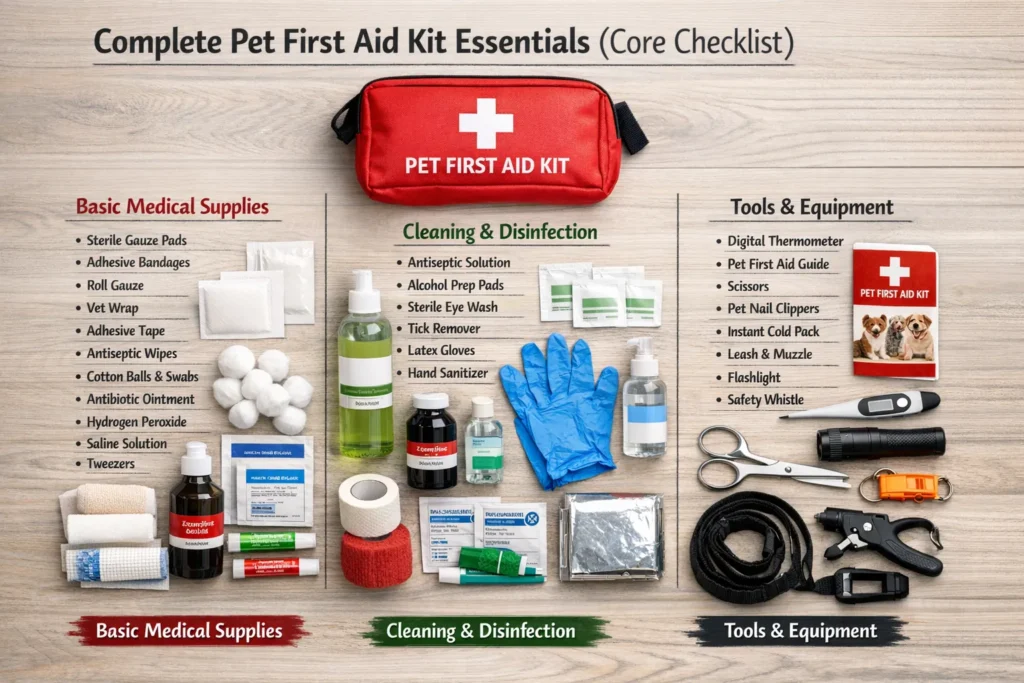
Basic Medical Supplies
- Sterile gauze pads & rolls
- Adhesive tape (pet-safe)
- Non-stick bandages
- Cotton balls/swabs
- Disposable gloves
Cleaning & Disinfection
- Antiseptic wipes (chlorhexidine)
- Hydrogen peroxide (for wound cleaning ONLY)
- Saline solution (eye wash)
Tools & Equipment
- Blunt-tip scissors
- Tweezers (for splinters/ticks)
- Digital thermometer (rectal)
- Tick remover tool
Medications (Vet-Approved Only)
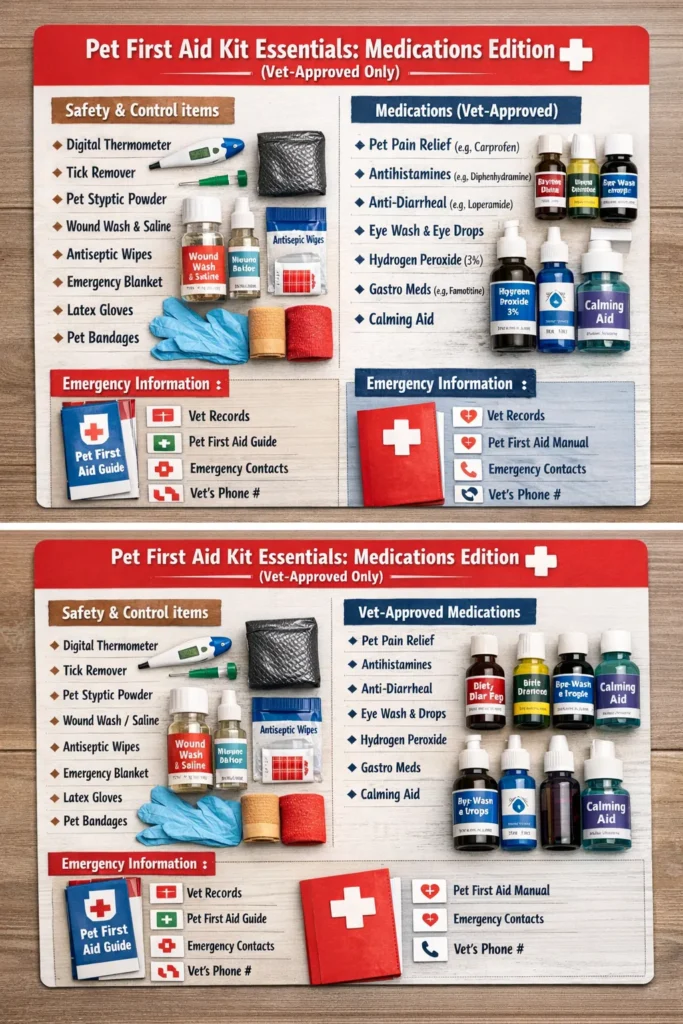
- Antihistamines (for allergies)
- Activated charcoal (poison cases)
- Styptic powder (bleeding control)
Safety & Control Items
- Muzzle (even friendly pets may bite in pain)
- Leash/harness
- Towel or blanket
Emergency Information
- Vet contact details
- Emergency clinic numbers
- Pet medical history
- Vaccination records
Dog vs Cat vs Small Pet Variations
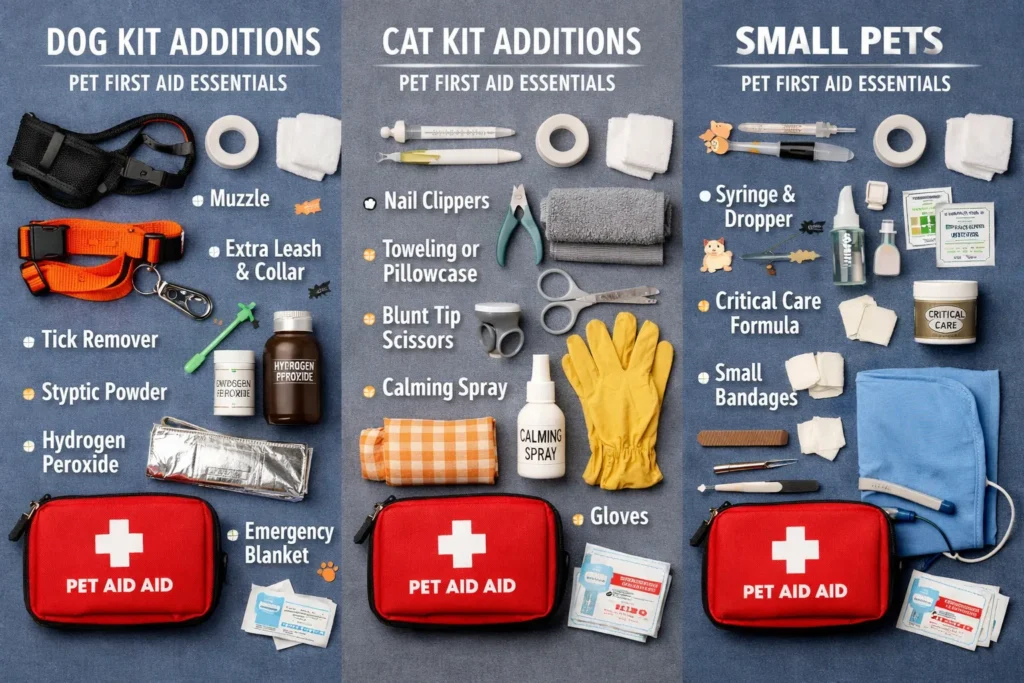
Dog Kit Additions
- Paw balm
- Booties (injury protection)
- Larger bandages
Cat Kit Additions
- Soft towel for restraint
- Smaller tools
- Eye wash solution
Small Pets
- Syringe feeder
- Heat pad
- Tiny bandages
Easy Home Variations (Budget-Friendly)
You don’t need expensive kits. Build your own:
- Use clean cloth instead of gauze
- Old towel as restraint wrap
- Plastic box as storage
- Basic аптек items from pharmacy
Common Pet Emergencies & What To Do
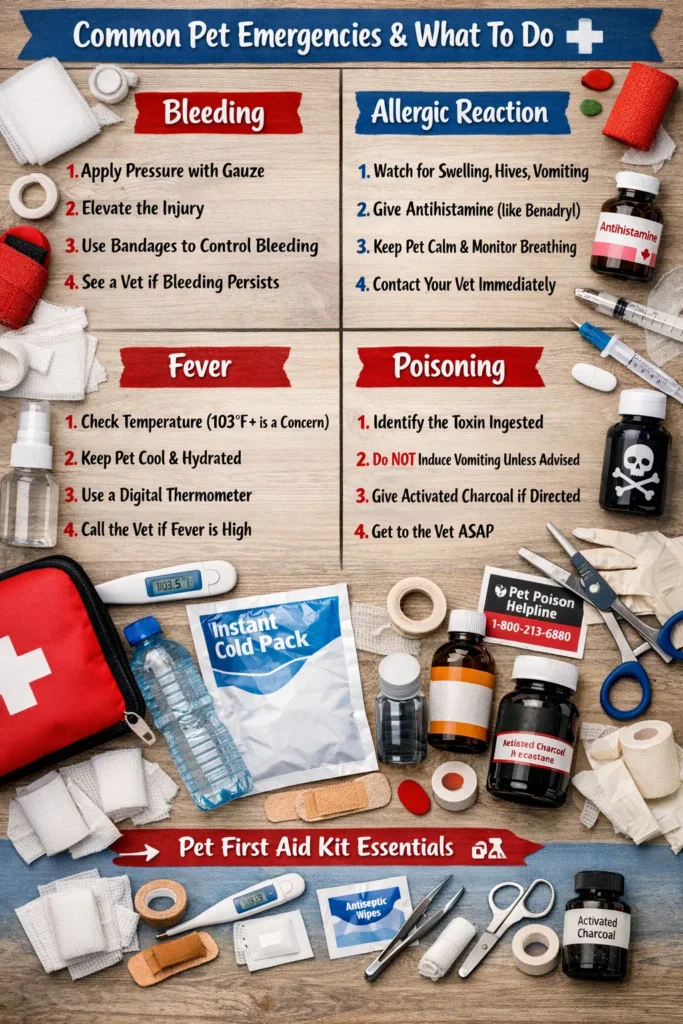
Bleeding
- Apply pressure with gauze
- Use styptic powder
- Keep pet calm
Allergic Reaction
- Swelling, itching
- Give vet-approved antihistamine
Fever
- Normal temp: 101–102.5°F
- Seek vet if higher
Poisoning
- Do NOT induce vomiting without vet advice
- Call emergency immediately
Travel Pet First Aid Kit Setup
Must-have extras:
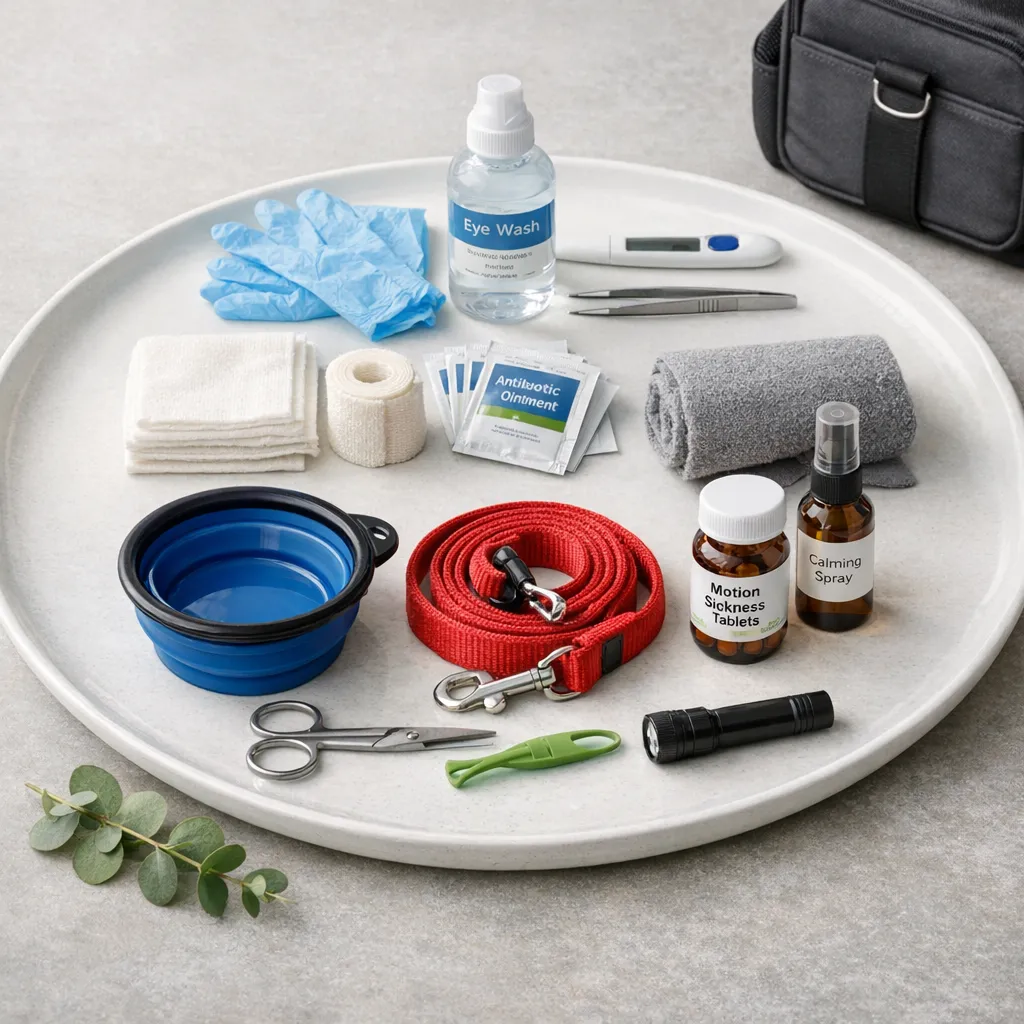
- Collapsible water bowl
- Extra leash
- Motion sickness meds
- Portable carrier
Common Mistakes to Avoid
- Using human painkillers
- Ignoring minor wounds
- Not updating kit
- No emergency contacts
Budget vs Premium Kit
| Type | Features |
|---|---|
| Budget | Basic supplies, DIY |
| Mid-range | Pre-packed kits |
| Premium | Advanced tools + meds |
Storage & Maintenance Tips
- Keep in accessible location
- Check expiry every 3 months
- Replace used items immediately
- Keep separate travel kit
Pro Safety Tips (Vet-Approved)
- Always stay calm
- Secure pet before treatment
- Know nearest emergency clinic
- Take pet first aid course
FAQs
1. What should be in a pet first aid kit?
Essential supplies include gauze, antiseptic wipes, scissors, thermometer, and emergency contacts.
2. Can I use human first aid supplies for pets?
Some items are safe, but avoid human medications unless approved by a vet.
3. How often should I check my pet first aid kit?
Every 3 months to replace expired or used items.
4. Do cats need a different first aid kit than dogs?
Yes, smaller tools and handling items are needed.
5. Is hydrogen peroxide safe for pets?
Only for wound cleaning—not for inducing vomiting unless instructed.
6. What temperature is dangerous for pets?
Above 103°F is considered dangerous.
7. Should I carry a kit while traveling?
Yes, especially for road trips or outdoor activities.
8. What is the most important item in the kit?
Emergency contact information.
9. Can I treat serious injuries at home?
No, first aid is temporary—always visit a vet.
10. What is a pet emergency kit vs first aid kit?
Emergency kits include food, water, and survival supplies.
11. Are pre-made kits worth it?
Yes, but DIY kits are equally effective if complete.
12. Do small pets need first aid kits?
Absolutely—especially for fragile animals like rabbits or birds.
Final Verdict
A pet first aid kit, well-equipped and at hand, is one of the smartest, most responsible investments any pet parent can make in 2026. Emergencies don’t offer advance notice, and in those vital first moments, your ability to respond quickly could make all the difference in your pet’s health and recovery.
A complete first aid kit gives you confidence and control, whether you are dealing with scratches, insect bites or stings, allergic reactions or serious situations that need to be stabilized before reaching the vet. And whether you go with a do-it-yourself setup on the lower end of the price spectrum or a more expensive, all-inclusive pre-packed kit, be sure it includes everything needed to handle any emergency and is tested often.
It was not just the need to have the tools, but for a genius on how to use them. It is helpful to take the time to learn some basic pet first aid techniques and keep those emergency contacts easily accessible, as this will save you precious time when it counts.
Your pet relies on you for safety, care and protection at the end of the day. When you prepare today, you’re not just building a kit; you’re creating a safety net capable of saving your pet’s life one day.




Leave a Reply