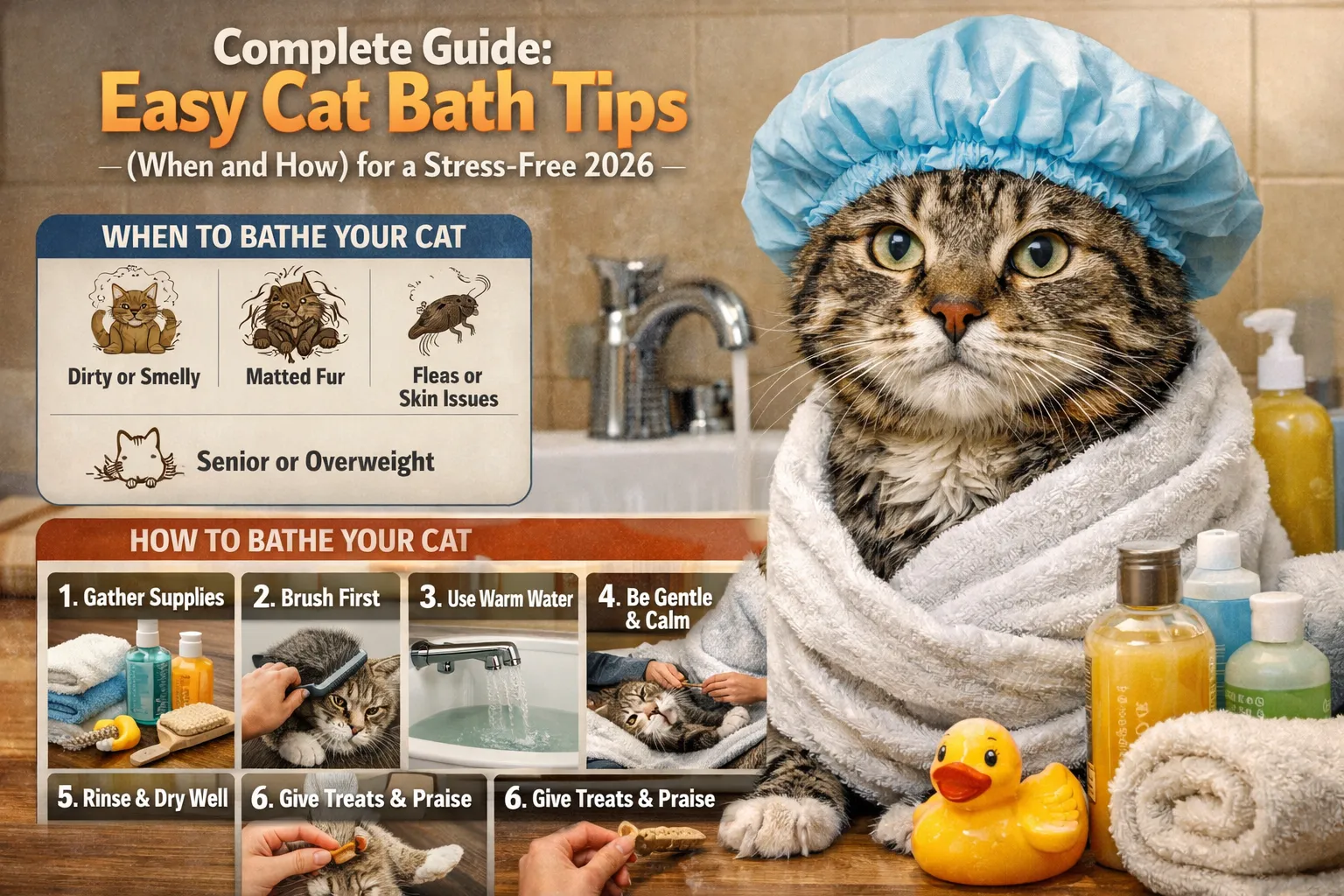
Cat bathing is widely regarded as a mission impossible in the eyes of pet owners throughout the US, UK, and Canada. But by 2026, learning cat bath tips (when and how) is a fundamental part of proactive Pet Health & Wellness. Cats are infamous self-groomers, but there are certain circumstances when nature could use a little assistance — whether during a “spring blow-out” shed, after dealing with skin allergies or cleaning an elderly cat who can no longer reach certain areas. The problem is that most owners only find out what the process entails in an emergency (like when a cat runs through the mud), and then they are both left in a high-stress situation.
The promise of this guide is to make a harried affair into an easy, predictable ritual. In this comprehensive guide, we share the best 2026 At-Home Grooming strategies and secrets, including when a bath is medically necessary and how to do it using top-rated safety method approaches. At Petscarex. com | Pet Hygiene Tips that Measure Up | Welcome to Your Cat Box Inc. Following our simple roadmap will reveal the best kept secrets to an effective, stress-free bath that leaves your cat´s coat spotless and their stress levels at a minimum.
In this complete guide, you’ll discover:
- The Best Cat Bath Tips (When and How) for 2026.
- When a bath is essential (Medical vs. Lifestyle reasons).
- How to prep your bathroom to prevent “feline flight” mode.
- The Top-rated waterless vs. traditional shampoos for cats.
- Expert Pet Safety Tips for handling kittens and senior felines.
Medical Requirements: Managing Cat Health Problems
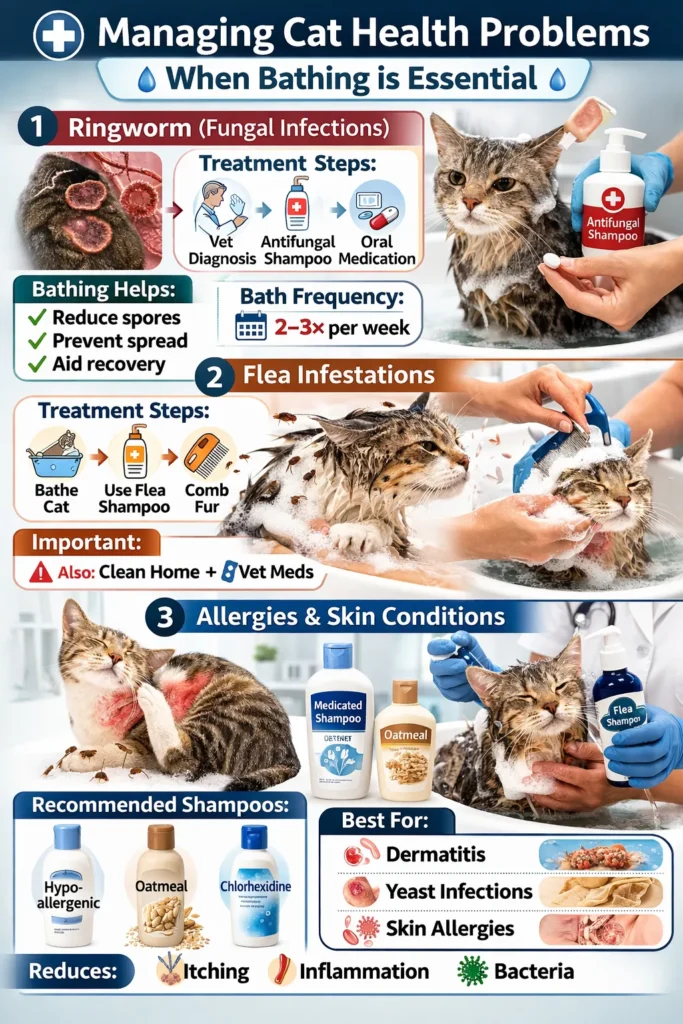
Certain health conditions make bathing essential rather than optional.
Ringworm (Fungal Infections)
Ringworm is a contagious fungal infection that spreads through spores. Veterinary-prescribed antifungal shampoos are often required alongside oral medication.
Bathing helps:
- Reduce fungal spores on the coat
- Limit spread to other pets
- Prevent household contamination
- Speed up treatment recovery
Consistency is key — usually 2–3 medicated baths weekly during treatment.
Flea Infestations
If your cat has fleas, bathing can:
- Drown live fleas
- Remove flea dirt
- Reduce egg load
- Support topical flea treatments
However, shampoo alone will not solve infestation. Combine bathing with:
- Environmental cleaning
- Vet-approved flea prevention
- Washing bedding
Allergies & Skin Conditions
Cats with dermatitis, yeast infections, or environmental allergies may benefit from:
- Hypoallergenic shampoo
- Oatmeal-based formulas
- Medicated chlorhexidine washes
These baths reduce:
- Itching
- Inflammation
- Bacterial overgrowth
The Senior Factor: Helping Older Cats with Arthritis
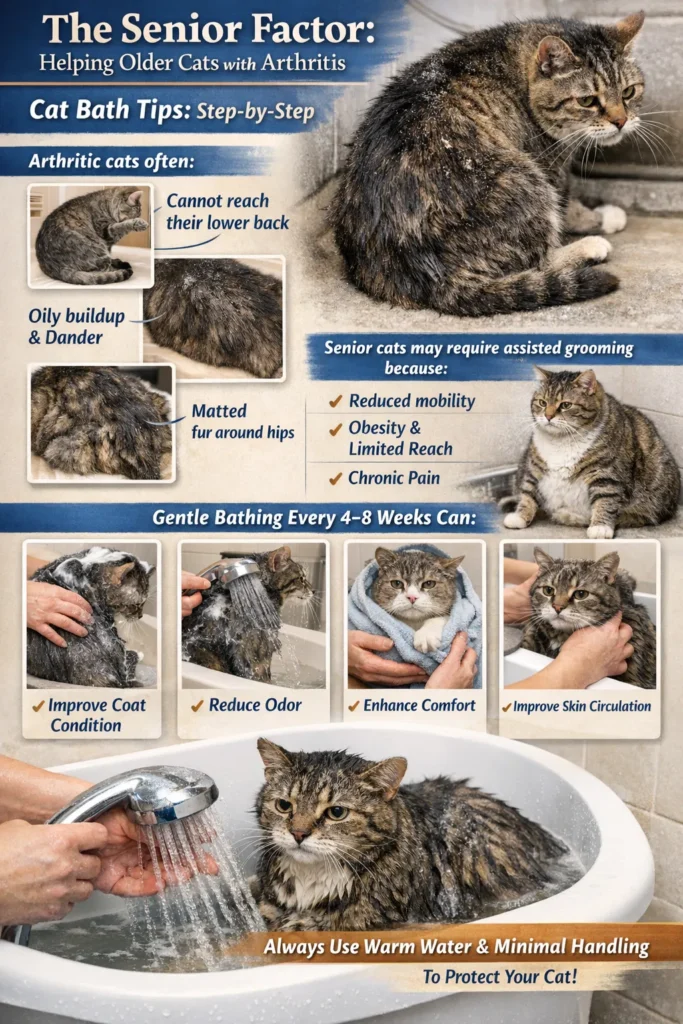
As cats age, flexibility declines.
Arthritic cats often:
- Cannot reach their lower back
- Develop oily buildup
- Accumulate dander
- Form mats around hips
Senior cats may require assisted grooming because:
- Reduced mobility prevents proper self-cleaning
- Obesity worsens reach limitations
- Chronic pain discourages grooming behavior
Gentle bathing every 4–8 weeks can:
- Improve coat condition
- Reduce odor
- Enhance comfort
- Improve skin circulation
Always use warm water and minimal handling to protect joints.
The “Spring Shed”: Managing the Undercoat Explosion
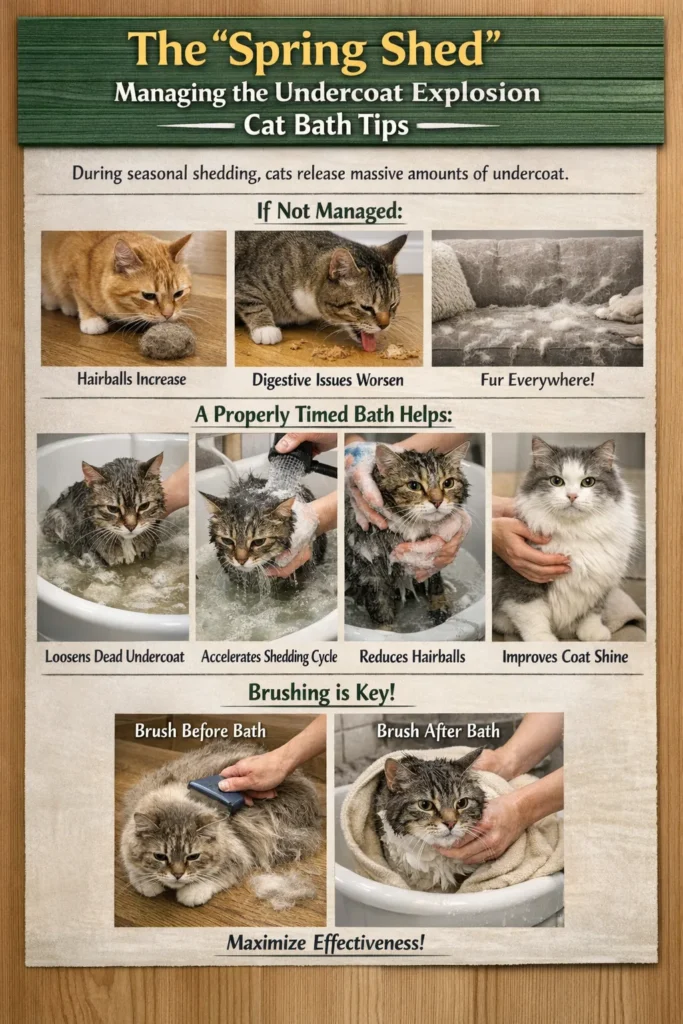
During seasonal shedding — especially spring — cats release massive amounts of undercoat.
If not managed:
- Hairballs increase
- Digestive issues worsen
- Home fur accumulation becomes overwhelming
A properly timed bath during heavy shedding:
- Loosens dead undercoat
- Accelerates natural shedding cycle
- Reduces hairball formation
- Improves coat shine
Brushing before and after bathing maximizes effectiveness.
Specific Breeds That Require More Frequent Grooming
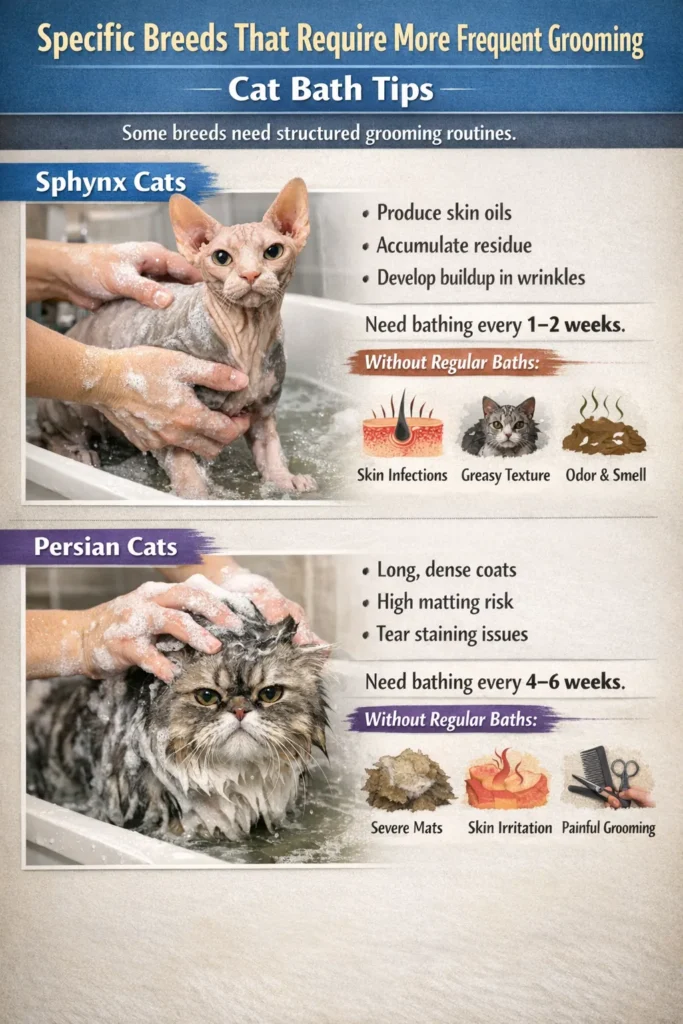
Some breeds need structured grooming routines.
Sphynx Cats
Despite being “hairless,” Sphynx cats:
- Produce skin oils
- Accumulate residue
- Develop buildup in wrinkles
They require bathing every 1–2 weeks.
Failure to bathe regularly leads to:
- Skin infections
- Greasy texture
- Odor development
Persian Cats
Persians have:
- Long, dense coats
- High matting risk
- Tear staining issues
Bathing every 4–6 weeks prevents:
- Severe mat formation
- Skin irritation
- Painful grooming sessions later
Maine Coons & Long-Haired Breeds
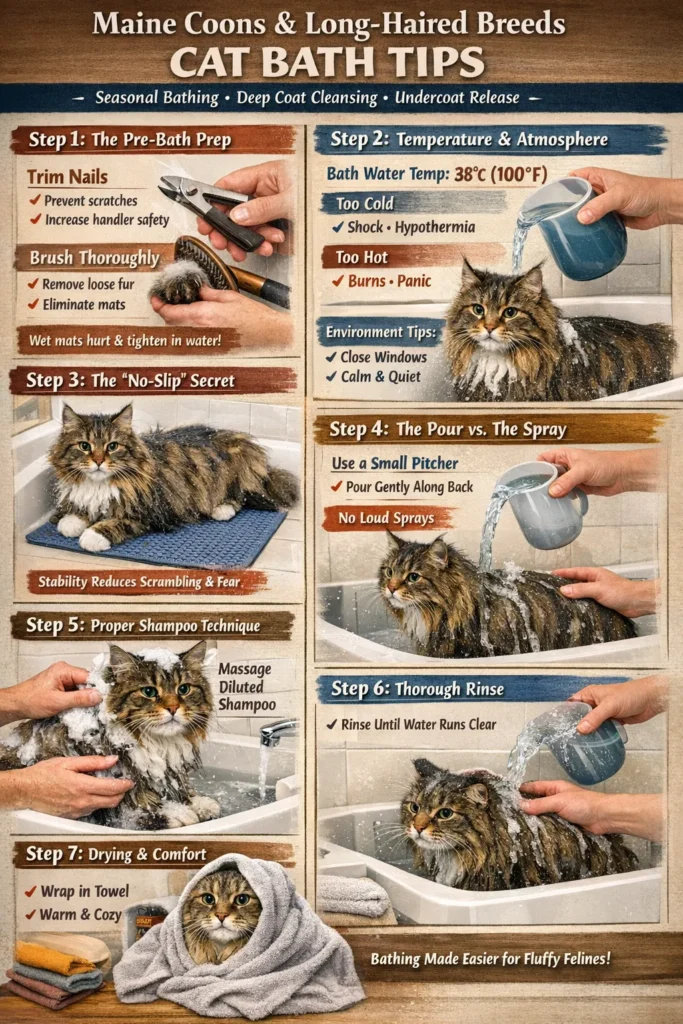
These cats benefit from:
- Seasonal bathing
- Deep coat cleansing
- Undercoat release treatments
Step 1: The Pre-Bath Prep (Crucial for Pet Safety)
Before introducing water:
Trim Nails
- Prevent scratches
- Reduce panic injuries
- Increase handler safety
Brush Thoroughly
- Remove loose fur
- Eliminate mats
- Prevent tightening of knots when wet
Wet mats become painful and impossible to untangle.
Step 2: Temperature & Atmosphere
Cats have a body temperature around 38–39°C (100–102°F).
The ideal bath water temperature:
38°C (100°F)
Too cold:
- Causes shock
- Induces stress
- Risks hypothermia
Too hot:
- Burns sensitive skin
- Causes panic
Environment tips:
- Close windows
- Turn off loud fans
- Use calm voice
- Avoid bright lighting
Step 3: The “No-Slip” Secret
Cats panic when they lose footing.
Use:
- Silicone bath mats
- Folded towels in sink
- Rubber grip surfaces
This dramatically reduces:
- Scrambling
- Clawing
- Fear response
Stability equals calm behavior.
Step 4: The Pour vs. The Spray
Never use a loud showerhead.
Instead:
- Use a small pitcher
- Pour gently along back
- Avoid face and ears
Why a pitcher is top-rated:
- No loud noise
- Controlled water flow
- Less sensory overload
- Reduced panic
Step 5: Proper Shampoo Technique
- Dilute shampoo slightly
- Massage gently from neck down
- Avoid face area
- Work in direction of fur growth
Leave medicated shampoos on for required contact time (5–10 minutes).
Step 6: Thorough Rinse
Incomplete rinsing leads to:
- Itching
- Flaking
- Skin irritation
Rinse until water runs completely clear.
Step 7: Drying & Comfort
Immediately:
- Wrap in microfiber towel
- Pat dry (do not rub harshly)
- Keep in warm room
Avoid hair dryers unless:
- Low noise
- Cool setting
- Cat is desensitized
Best Traditional Shampoos (2026 Formulas)
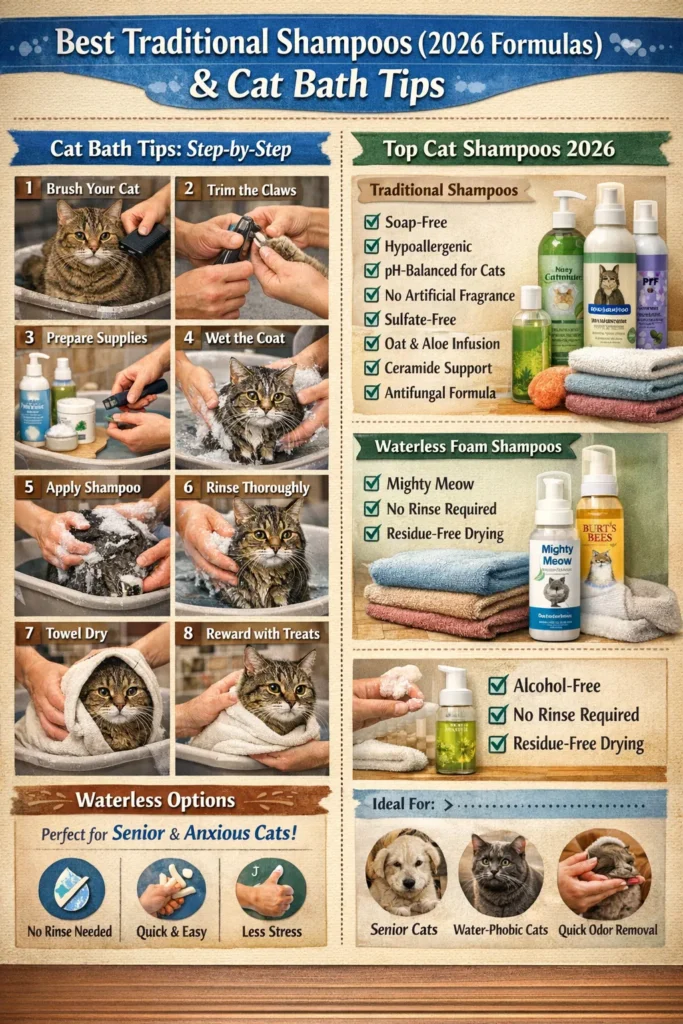
Look for:
- Soap-free
- Hypoallergenic
- pH-balanced for cats
- No artificial fragrance
- Sulfate-free
Top-rated 2026 features:
- Oat protein blends
- Aloe infusion
- Antifungal chlorhexidine
- Ceramide skin barrier support
Waterless Foam Shampoos
Perfect for:
- Senior cats
- Water-phobic cats
- Quick odor removal
Benefits:
- No rinse required
- Quick application
- Lower stress
Look for:
- Alcohol-free formula
- Non-sticky finish
- Residue-free drying
Top 2026 Grooming Gloves & Towels
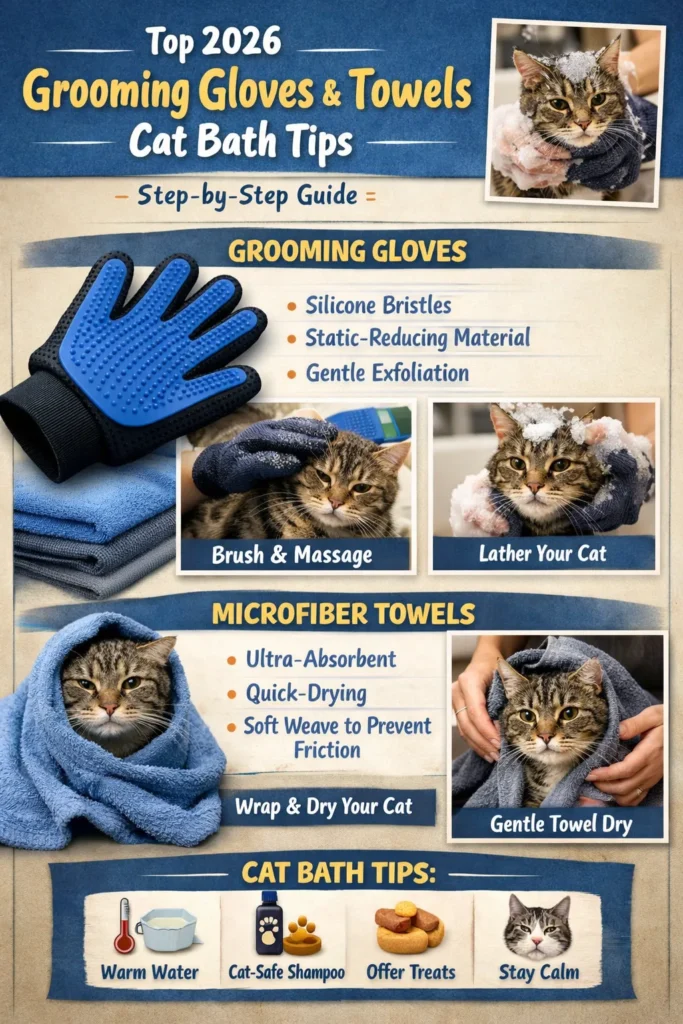
Grooming gloves:
- Silicone bristles
- Static-reducing material
- Gentle exfoliation
Microfiber towels:
- Ultra-absorbent
- Quick-drying
- Soft weave to prevent friction
Positive Reinforcement Strategy
Use 2026’s popular “lickable treats.”
These:
- Distract during rinsing
- Create positive association
- Reduce fear memory
Apply treat on:
- Silicone lick mat
- Bathtub wall
- Spoon held nearby
Never punish resistance.
Body Language Awareness
Watch for:
- Dilated pupils
- Flattened ears
- Rapid tail flicking
- Growling
If observed:
- Pause immediately
- Speak softly
- Reduce stimulation
Post-Bath Recovery
Create a “Drying Station”:
- Warm towel bedding
- Quiet room
- Dim lighting
- No sudden noises
Hypothermia risk increases in wet cats.
Keep environment warm for at least 30–60 minutes.
Kitten Care Guide
The “socialization window” (2–7 weeks old) is ideal for introducing water safely.
Steps:
- Start with damp cloth
- Gradually introduce shallow water
- Use positive reinforcement
- Keep sessions under 5 minutes
Goal:
Water becomes normal — not traumatic.
Senior Cat Care: Specialized Bathing Tips
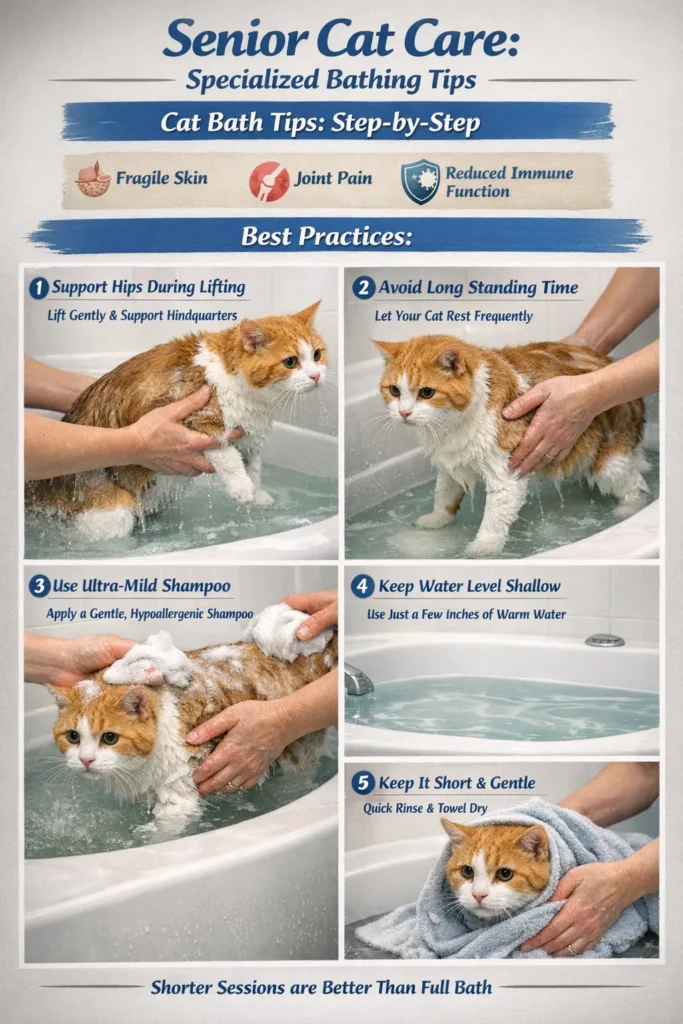
Senior cats may have:
- Fragile skin
- Joint pain
- Reduced immune function
Best practices:
- Support hips during lifting
- Avoid long standing time
- Use ultra-mild shampoo
- Keep water level shallow
Shorter sessions are better than full baths.
FAQs
- Exactly how often should I follow these cat bath tips?
- Most cats only need a bath every 4 to 6 months, unless they have a medical skin condition.
- What is the best “how” for a cat that hates water?
- The best 2026 alternative is using a waterless foam shampoo and a damp microfiber cloth.
- Can I use baby shampoo on my cat?
- No. Even “gentle” human shampoos can disrupt the feline pH balance and lead to skin infections.
- When should I avoid giving my cat a bath?
- Avoid bathing right after a meal or if the cat is already in a high-stress state (panting/hissing).
- How do I dry a cat safely in 2026?
- Towel-drying with an absorbent microfiber wrap is best. Only use a blow dryer on the “ultra-low/cool” setting.
- Do indoor cats ever need a bath?
- Yes, especially for Shedding Control in the spring or to remove household dust and allergens.
- What is the easiest way to prevent scratching during a bath?
- Trim the nails 24 hours before the bath and use a “grooming bag” or harness for control.
- How do I clean a cat’s face without getting water in their ears?
- Use a simple damp washcloth with no soap for the face and ears to prevent yeast infections.
- What is the best shampoo for cats with spring allergies?
- Look for top-rated 2026 formulas containing Ceramides or Oatmeal.
- Why does my cat lick themselves excessively after a bath?
- This is a “scent reset.” Ensure you used a fragrance-free shampoo to minimize this behavior.
- Can kittens have their first bath in the spring?
- Yes, once they are over 8 weeks old. Follow our Kitten Care Guide for temperature specifics.
- Is there a “top” trick for keeping a cat calm?
- Apply a Feliway pheromone spray to the bathroom 15 minutes before the bath begins.
Final Verdict
In 2026, some tips on how to give a cat bath (and when) are an absolute rite of passage for any committed pet parent. Although the thought of bathing a cat may sound like a necessary form of torture, this migration from being reactive to developing an existing, easy routine is the path to triumph. As we have covered in this Complete Guide, the key is preparation and focusing on the organic biological requirements of your cat. Whether you are using a highly rated waterless foam for a quick pick-me-up, or putting in the time with a medicated full bath for Shedding Control, your pet comes away healthier and with far more relaxed skin.
At Petscarex. We at Cattime jointly run Cattime with other sites for pet owners in the US, UK, and Canada. With the combination of the right Pet Products & Reviews with some easy to follow Pet Hygiene Tips, we give you all the tools you need to make your cat’s grooming a breeze. Keep in mind, a bath is not only about having a clean coat—it’s also a way to check for any issues with your kitty’s skin, help prevent hairballs, and strengthen the bond between you both. So embark on your At-Home Grooming adventure today with newfound confidence — make 2026 the year of the easy-breezy feline bath!


Leave a Reply