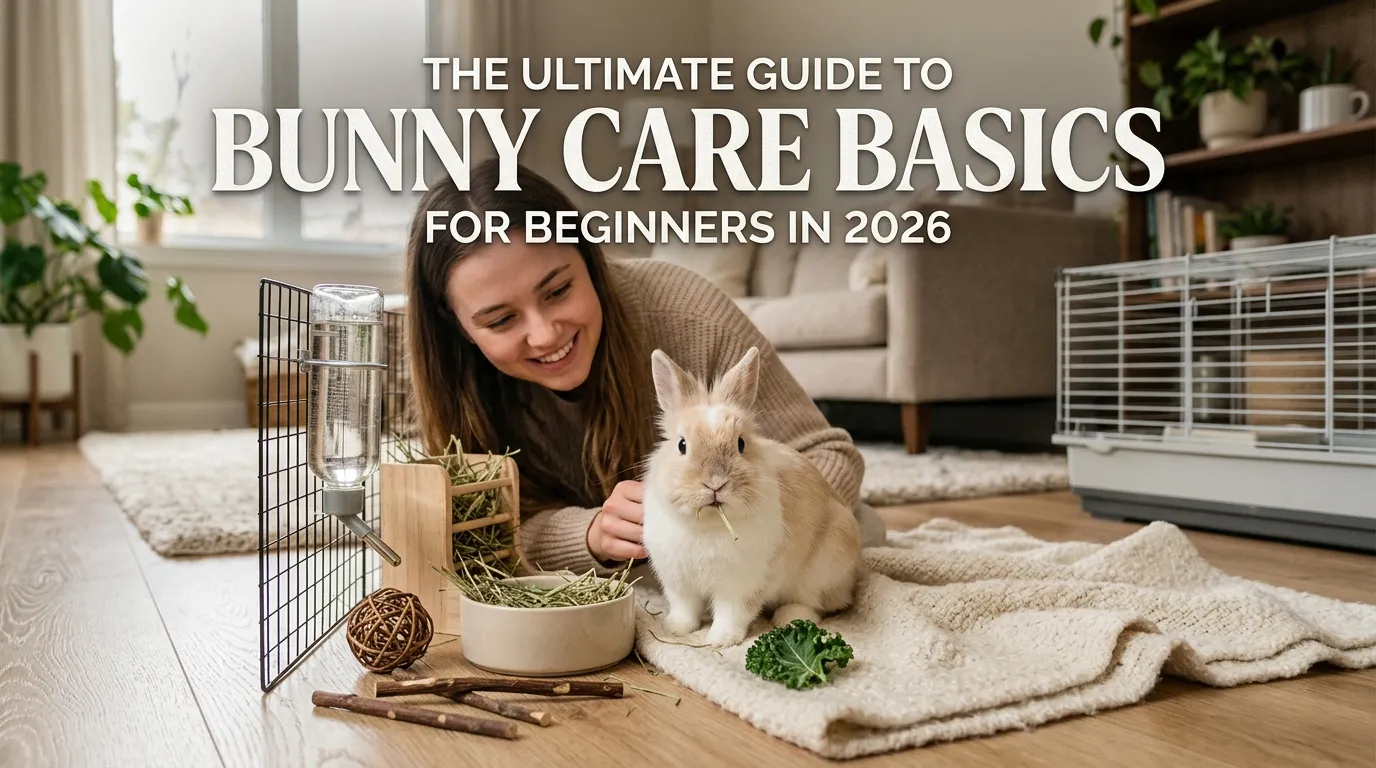
10 Essential Things to Know When Introducing a Rabbit into Your Home With twitching noses, fuzzy coats and cute little “binkies” (happy hops), it’s no surprise that rabbits are the third most popular pet in the US and UK. However, it is a common misconception that rabbits are “low maintenance” starter pets. The truth is that looking after a bunny is quite an undertaking and some specialist information. Unlike cats or dogs, rabbits have specialized digestive systems and behavioral needs that, if misunderstood, can cause significant health problems.
Many new owners aren’t prepared for the amount of care involved, from bunny-proofing electrical cords to knowing what specific foods they require. In this definitive guide, you will learn about all that a beginner may need to know by the year 2026. We’ll go over setting up the ideal home, what to feed them (spoiler: it’s not just carrots!) litter training and health basics on how to help your furry friend live at least 10 years always happy and healthy.
The Complete Guide to Bunny Care Basics for Beginners in 2026
So, you want to adopt a rabbit or just brought one home. Congratulations! Rabbits are smart, social and deeply rewarding companions. But if you want your new friend to have a long and healthy life with you, you need to go deeper than the surface-level stereotypes and get up to speed on modern rabbit care. This guide covers everything from setup to vet visits.
Preparation: What You Need Before the Bunny Arrives
Even before you bring your rabbit home, they need to have their environment prepared. This lowers anxiety for both the animal and you. Rabbits are prey animals, which means a new environment is scary; that’s why it’s so important to have a safe place set up.
The Shopping List: Essentials First
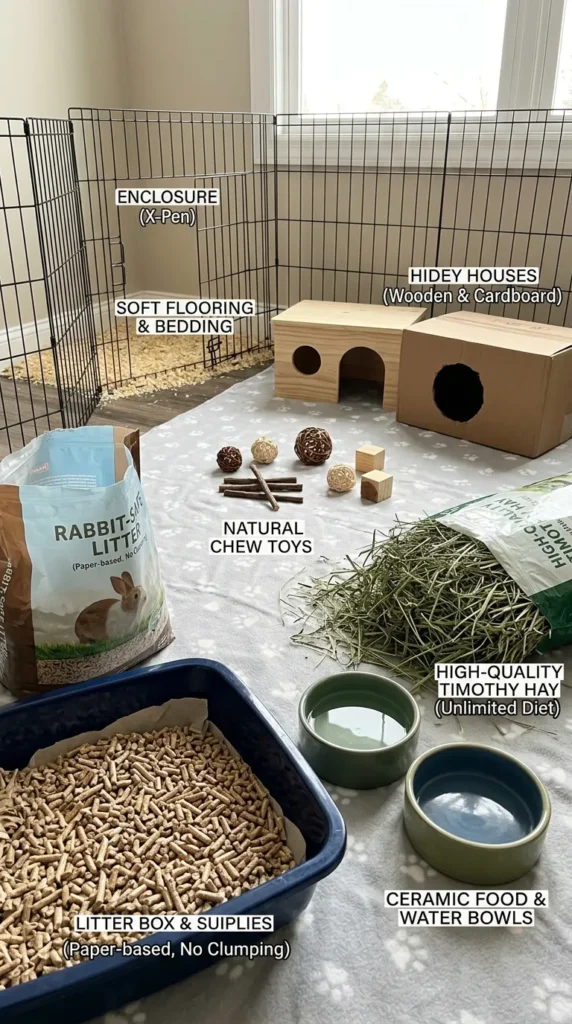
- Enclosure (X-Pen is Best): The small hutches you see in cartoons? A rabbit needs space to hop around, stand up on their hind legs and stretch. An exercise pen (x-pen)/large dog exercise pen is perfect. As a minimum, it should be 4 foot by 2 foot, but bigger is always better.
- Flooring: Do not use a wire-bottomed cage. They create painful lesions on rabbits’ feet known as sore hocks. Solid flooring with soft bedding, such as aspen shavings, paper-based bedding and/or fleece liners, is ideal.
- Hidey House:When rabbits startle, they need a place to retreat to. This can be a wooden house, a cardboard box with holes cut out or an igloo style shelter
- Litter Box & Supplies: A cat-sized litter pan and rabbit-safe litter (paper-based or wood pellets). Never use clumping cat litter, as it is fatal if ingested .
- Food & Water Bowls:Heavy ceramic bowls are preferable since they are difficult to upend. Water bottles are widely used, but they only let your pup drink from the metal tip on the bottle and promote faster drying out benefits, whereas bowls offer dogs a more natural way to hydrate and recover—albeit dirty.
- Hay: Unlimited, high-quality Timothy hay (or orchard grass, meadow hay). This is 80% of their diet .
- Chew Toys: Applewood sticks, willow balls, untreated pine blocks. Chewing is essential for dental health .
Housing: Indoors vs. Outdoors
One of the biggest shifts in rabbit care is the move toward keeping rabbits indoors.
The Case for Indoor Living
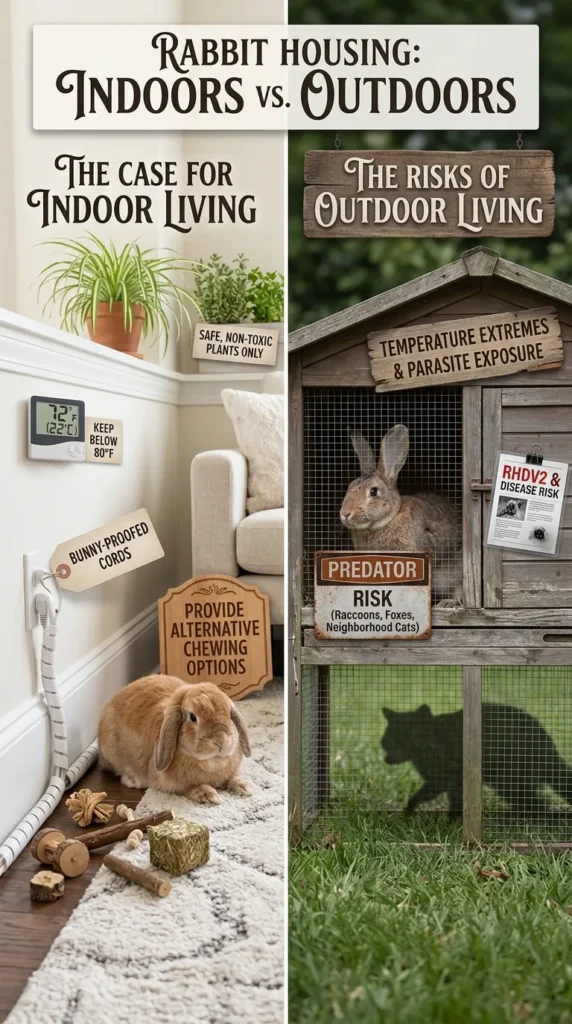
Pet rabbits have traditionally been kept in outdoor hutches, but veterinary and animal welfare organizations now recommend they be housed indoors. Outdoor hutches put rabbits at risk to predators (raccoons, foxes, even neighborhood cats), temperature extremes, parasites and the deadly Rabbit Hemorrhagic Disease Virus (RHDV2).
Bunny-Proofing Your Home
Rabbits explore the world with their mouths and love to chew. Before letting your rabbit roam, you must “bunny-proof.”
- Cords and Wires: Electrical cords are a major hazard. Hide them behind furniture or use spiral cable wrap or PVC tubing to protect them .
- Baseboards and Furniture: Provide plenty of alternative chewing options. If your rabbit goes for the baseboard.
- Toxic Plants: Many common houseplants are toxic to rabbits. Remove them from any room the rabbit accesses .
- Temperature: Rabbits are sensitive to heat. Keep the indoor temperature below 80°F (26.5°C) .
The Cornerstone of Health: Diet and Nutrition
The outdated stereotype of rabbits eating nothing but carrots is not only false — it’s deadly. Carrots are sweet and should be a special treat, not a diet staple. Rabbits have a defined diet and need it to simply stay alive. Gastrointestinal (GI) stasis, a potentially-fatal condition in which the digestive system grinds to a halt, is nearly always diet-related.

The 80/10/5 Rule
A balanced diet breaks down as follows :
- 80% Hay (Unlimited Access): This is the most important part of your rabbit’s diet.
- Timothy Hay is the best choice for adult rabbits.
- Other grass hays like Orchard Grass, Meadow Hay, or Oat Hay are great alternatives .
- Alfalfa Hay has way too much calcium and protein for adult rabbits, so it should only ever been fed to babies, pregnant/nursing mothers, or underweight rabbits at vet instructions.
- 10% Fresh Leafy Greens (Daily): Aim for about 2 packed cups per 6 lbs of body weight.
- Great Choices: Romaine lettuce, red leaf lettuce, green leaf lettuce, cilantro, parsley, basil, mint, dandelion greens, carrot tops, bok choy .
- Limit or Avoid: Iceberg lettuce (no nutritional value), spinach and kale (high in calcium/oxalates, feed in rotation).
- 5% High-Fiber Pellets (Limited): Pellets are like vitamin supplements—a little is good, too much causes obesity.
- Feed only 1/4 cup per 5 lbs of body weight per day .
- Choose plain, high-fiber, Timothy-based pellets. Avoid muesli-style mixes with colorful bits, as rabbits will selectively feed and miss vital nutrients, leading to dental and digestive issues .
- Treats (Less than 5%): Fruits and root vegetables are treats.
- Small portions of apple (no seeds), banana, blueberry, or carrot, once or twice a week .
Hydration
Fresh, clean water must be available 24/7. Clean and refill their water bowl or bottle daily .
Behavior, Training, and Socialization
Rabbits are far more intelligent than they are given credit for. They can learn tricks, recognize their names, and are naturally clean animals.
The Joy of Litter Training
Because rabbits are territorial, they tend to want to keep their sleeping and eating areas clean. This makes them naturally inclined to use a litter box.
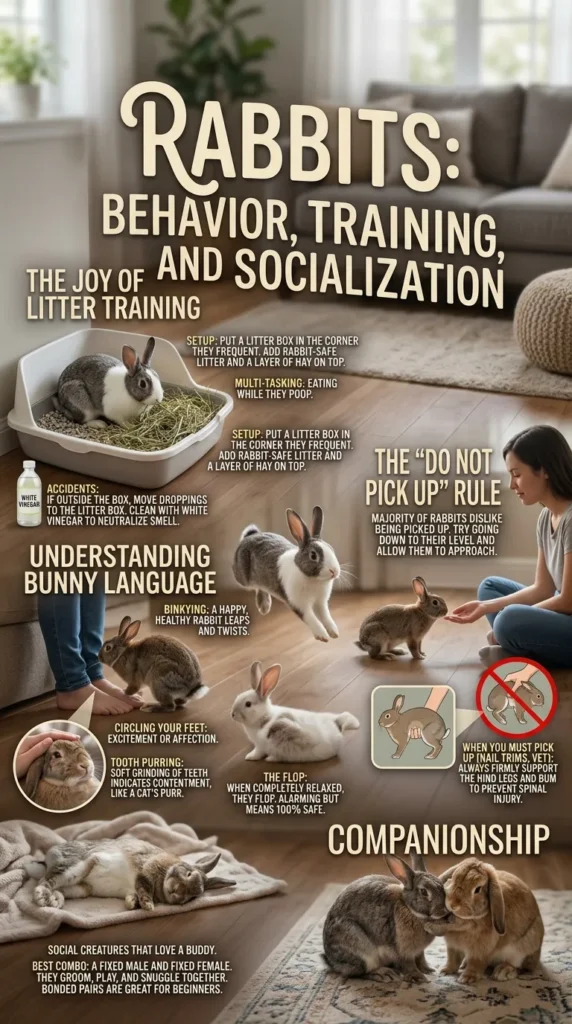
- Setup: Put a litter box in the corner of their enclosure that they already frequent. Put rabbit-safe litter in the bottom and add a layer of hay on top. Rabbits like eating hay while they poop — it’s a multi-tasking moment for them.
- Accidents: If they have accidents outside the box, simply move the droppings into the litter box. Clean soiled areas with white vinegar to neutralize the smell.
Understanding Bunny Language
- Binkying: A happy, healthy rabbit will leap into the air and twist their body. It’s the ultimate sign of joy .
- Circling Your Feet: This is often a sign of excitement or affection (and sometimes hormones!). They might be asking for a treat or showing they love you.
- Tooth Purring: A soft grinding of the teeth, similar to a cat’s purr, indicates contentment, usually when they are being petted.
- The Flop: When a rabbit is completely relaxed, they will literally flop onto their side. It looks alarming, but it means they feel 100% safe.
The “Do Not Pick Up” Rule
The majority of rabbits dislike being picked up. They are prey animals in the wild and being picked up simulates getting snatched by a predator. If they are running away from you, instead of catching hold of them, try going down to their level. Sit on the floor and allow them to approach you for pats. When you do have to pick them up (for nail trims or vet visits), always firm the support their hind legs and bum as much as possible so they don’t kick and injure their spine.
Companionship
Rabbits are social creatures that love a buddy. In much of Europe, keeping a rabbit alone is illegal. The best combination is a fixed male and a fixed female. They’re able to groom, play and snuggle together. When adopting a bonded pair from a shelter, it is a great option for beginners.
Health, Grooming, and Veterinary Care
Rabbits are considered “exotic” pets in the veterinary world, meaning not every vet is qualified to treat them.
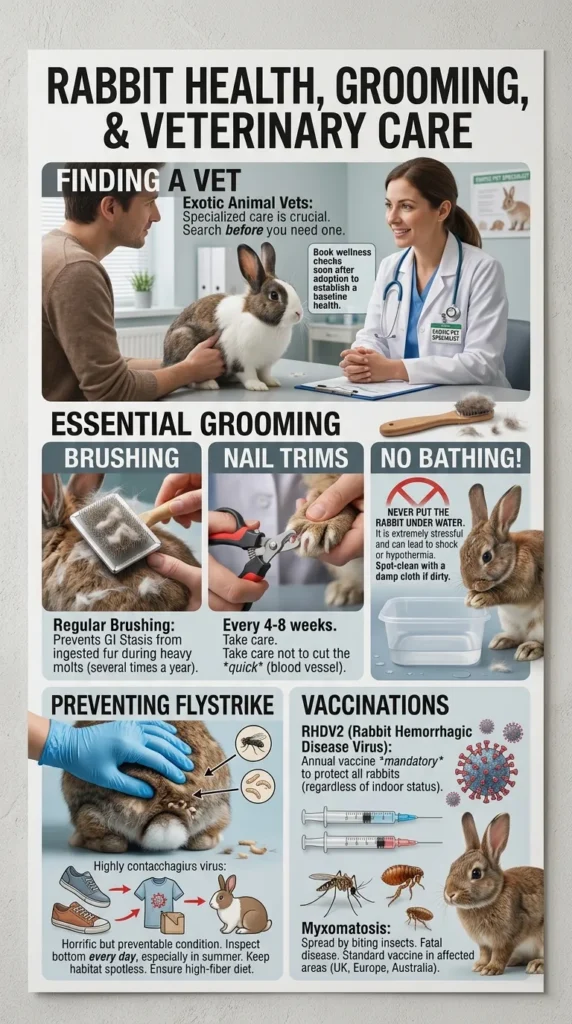
Finding a Vet
Before you even need one, find out who specializes in rabbits (often called an “exotic animal vet”) near where you live. Book a wellness checks soon after adoption to establish a baseline for their health.
Essential Grooming
- Brushing: Rabbits go through heavy molts several times a year. Regular brushing (weekly, or daily during heavy sheds) removes the fur before they ingest it when self-grooming, which can cause GI stasis.
- Nail Trims:Nail Trims: Rabbit nails grow constantly and must be trimmed each 4-8 weeks. A vet or vet tech can also teach you how. Take care not to cut the quick (the blood vessel within the nail).
- No Bathing! Never put the rabbit under water. It is extremely stressful and can lead to shock or hypothermia. Rabbits are fastidious self-groomers. If they’re dirty, spot-clean with a damp cloth.
Preventing Flystrike
It is a horrific but preventable condition. Flies are attracted to filthy fur (typically around the rear end) and deposit eggs that will later hatch into maggots that consume the rabbit’s flesh. Inspect your rabbit’s bottom every day, particularly in summer. In fact, their habitat should be spotless, and they need a good amount of fiber in their diet to keep from producing soft, sticky feces.
Vaccinations
In many regions (especially the UK, Europe, and Australia), vaccines are crucial.
- RHDV2 (Rabbit Hemorrhagic Disease Virus):This highly contagious, fatal virus has spread worldwide. It can be carried inside on shoes or clothes. Most importantly, an annual vaccine is needed to protect your rabbit, regardless of whether they are an indoor bunny or not.
- Myxomatosis: A fatal disease spread by biting insects. Vaccination is standard in the UK and other affected areas .
Signs of a Sick Rabbit (When to Go to the Vet)
Rabbits hide illness as a survival instinct. If you notice any of these signs, it is an emergency:
- Not eating or passing stool for 12 hours (GI stasis).
- Lethargy (quiet, hunched in a corner).
- Teeth grinding (a sign of pain, not contentment).
- Difficulty breathing or discharge from nose/eyes.
FAQs
1.Are rabbits suitable pets for children?
Rabbits are adorable but not generally appropriate pets for young children. Dropping or handling them roughly can easily damage those delicate parts. As prey animals, they generally hate being picked up and will scratch or bite in fear. Rabbits are most appropriate for older children, teens and adults who appreciate the need to treat every living thing gently and with respect.
2.How long do pet rabbits live?
With good indoor care, a balanced diet, and regular vet visits, pet rabbits can live for anywhere from 8 to 12 years. Some may even live into their midteens. This is a long-term decision, like adopting a dog or cat.
3.Which human foods are safe for rabbits to eat?
Rabbits can eat a wide range of leafy greens, including romaine lettuce, cilantro and basil. They can also be a little of fruits like apple (no seeds) and blueberry. Never give rabbits chocolate, avocado, meat, dairy or bread or pasta or cookies and crackers. These do not belong to their digestive tract and puede causar la muerte.
4.Do rabbits smell?
Rabbits themselves are super clean creatures and groom for hours. (They aren’t particularly pungent.) You often smell it when one of the enclosures has not been cleaned. If the litter box is cleaned every 2-3 days and the main enclosure once a week, there will not be any bad smell.
5.Can I keep my rabbit outside?
It may be done, though it is not encouraged and can only work for very specific climates with secure housing. Rabbits kept outside face dangers from predators, extreme temperatures, parasites and lethal diseases such as RHDV2. Rabbits live more safely, healthfully and closely with their owners indoors.
6.Why does my rabbit eat its own poop?
This is perfectly normal and healthy. It’s called cecotrophy. Rabbits make special soft, nutrient-rich droppings called cecotropes, which they consume directly from the anus to re-digest vital vitamins and bacteria. And yes, you’ll hardly ever see this if so don’t be alarmed.
7.Just how much space does a rabbit need?
To be able to hop, a rabbit should have room to take three hops in the same direction. Their enclosure (if it is an x-pen) should at the minimum be 4 feet by 2 feet, but bigger is better. They also require 3-4 hours a day outside of that enclosure to run around and explore in a safe, bunny-proofed room.
8.Do rabbits bite?
Rabbits are also capable of biting, but typically only as a last resort. They may bite when scared, in pain or if they’re protecting territory. A nip can also be a polite way of saying “please move over”/get your attention. This is when learning their body language is key to avoiding bites.
9.Would I do better having two rabbits?
Yes, absolutely. As social animals, rabbits do better in pairs. A bonded pair will groom one another, play together and keep each other company when you aren’t home. The most common pairing is between a neutered male and a neutered female.
10.How do I pick up my rabbit?
Never lift them by the ears or scruff. When lifting a rabbit, you should have one hand under their chest and the other support their hindquarters and bottom. Bring them tight up against your body. It helps to always have their back feet supported in order to prevent them from kicking as they may injure their spine.
11.Which vegetables Rabbits should not eat?
Stay away from starchy vegetables such as potatoes and corn. Some greens, such as rhubarb, can be toxic. Iceberg lettuce is extremely low in nutrition and has been shown to induce diarrhea. Seriously, beans and other legumes can give such a bad case of the farts that it is very dangerous for rabbits who cannot pass gas.
12.What is GI Stasis?
Gastrointestinal (GI) stasis is a potentially life-threatening condition that occurs when a rabbit’s gut slows down or stops functioning altogether. Symptoms include a sudden loss of appetite, very small or no droppings and lethargy. It is commonly caused by stress or pain, as well as dehydration or a low-fiber diet. It needs to be seen by a veterinarian without delay.
Final Verdict
Keeping a rabbit is an experience that extends beyond the hutch and a few crunchies. As we discussed in this complete guide for 2023, these highly intelligent and sensitive animals require an understanding of their unique needs — including the availability of unlimited Timothy hay (which helps keep their digestive and dental systems healthy) and bunny-proofing your home (to remove potential hazards). Although they may be smaller than cats or dogs, their needs are just as complex and their capacity for love is just as large.
For the first-time bunny, there can be a steep learning curve and initial setup but in return, you have your first pet that will run around in joyous circles to see every time you come home; flop by your feet with complete trust and “binky” as joy in your lounge room. And remember, a rabbit is a commitment of at least 8 to 12 years. By choosing to limit the outdoor time of your pets, feed them properly, provide companionship and monitor their health through regular vet visits, you are giving them the highest quality life. If you are prepared to offer this type of care, you aren’t simply getting a pet; you’re receiving a new member of the family. Come on in, the water’s fine (but DON’T bathe your rabbit in it!)




Leave a Reply