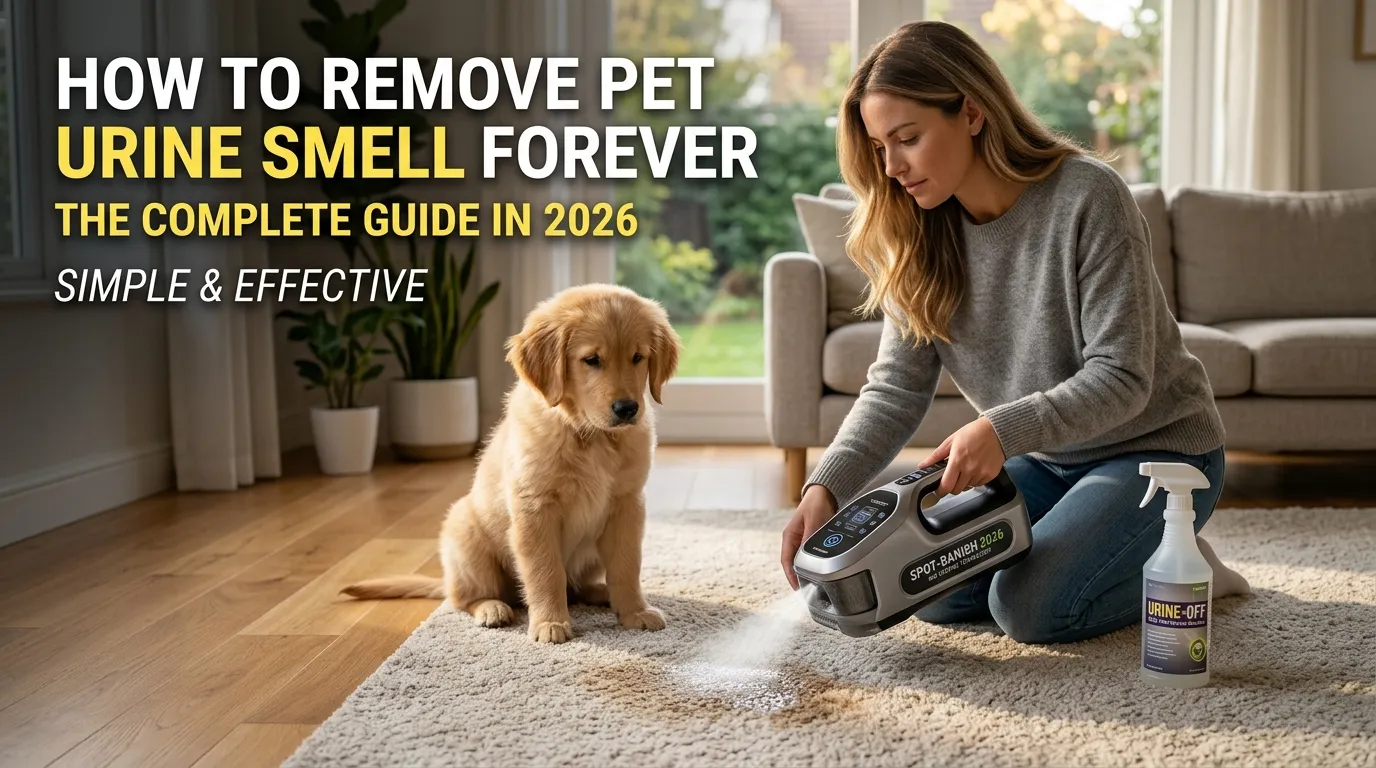
Stepping inside your home should be a breath of fresh air, not an assault on the senses or reminder of your pet’s recent “accident.” We’ve all experienced this: You scrub; you spray; you ventilate, but that sharp, ammonia-like smell persists in the fabric of your life. The issue isn’t how well you clean, it’s the chemistry of the urine itself. Standard soaps cannot decompose the uric acid crystals that trap odors deep in carpets and floorboards.
In this ultimate 2026 guide, we will walk you through the steps to eliminate how to remove pet urine smell odor scientifically proven methods that actually work. Be it another new puppy in the US or a senior cat in the UK, these foolproof and polite variations will save your floors — and nose. You’ll find out how your current routine could be making matters worse, and what top-of-the-line tools are necessary for a truly hygienic home. From DIY kitchen pantry hacks to the best high-tech enzyme cleaners, we’ve got all you need to get odors out for good.
In this complete guide, you’ll discover:
- The science behind why pet urine smells so persistent.
- Step-by-step DIY methods using household staples.
- Top-rated enzyme cleaners for 2026.
- How to find “invisible” old stains using UV technology.
- Specific strategies for different surfaces (Carpet vs. Hardwood).
- Pro tips to prevent repeat accidents.
The science behind why pet urine smells so persistent.
The persistence of pet urine odor is due to its unique chemical evolution and the way its components interact with your home’s surfaces.
1. The “Uric Acid Crystal” Problem
The primary culprit behind why the smell returns even after deep cleaning is uric acid.
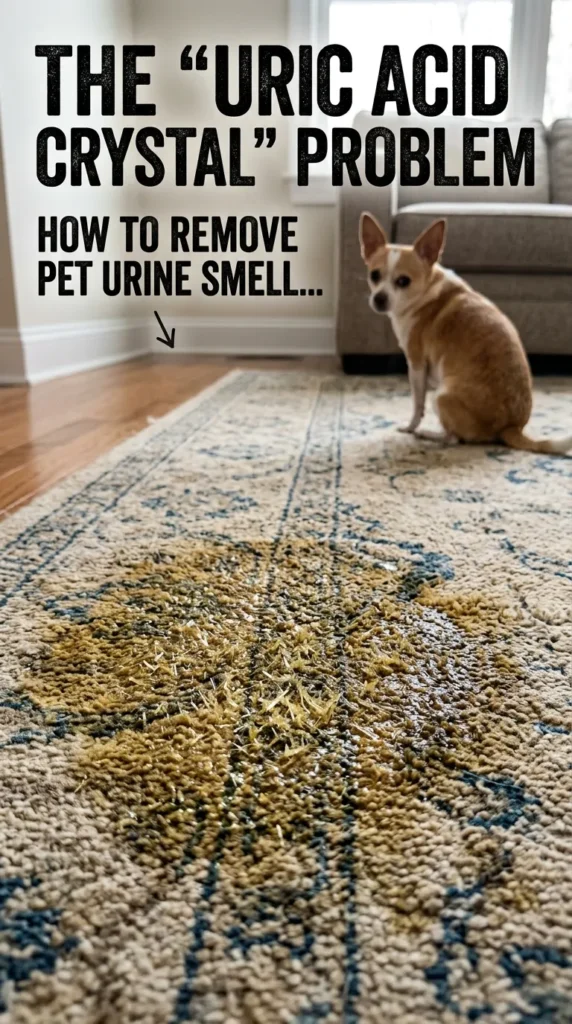
- Insoluble Bonds: Unlike other urine components like urea (which is water-soluble), uric acid forms tough, salt-like crystals that do not dissolve in standard soap or water.
- The Humidity Trigger: These crystals may lie dormant for decades in carpets, floorboards, or subfloors. Humidity increases, and the crystals “rehydrate” and release obnoxious ammonia gas all over again.
2. Bacterial Decomposition & Ammonia
The smell changes and worsens over time due to biological activity.
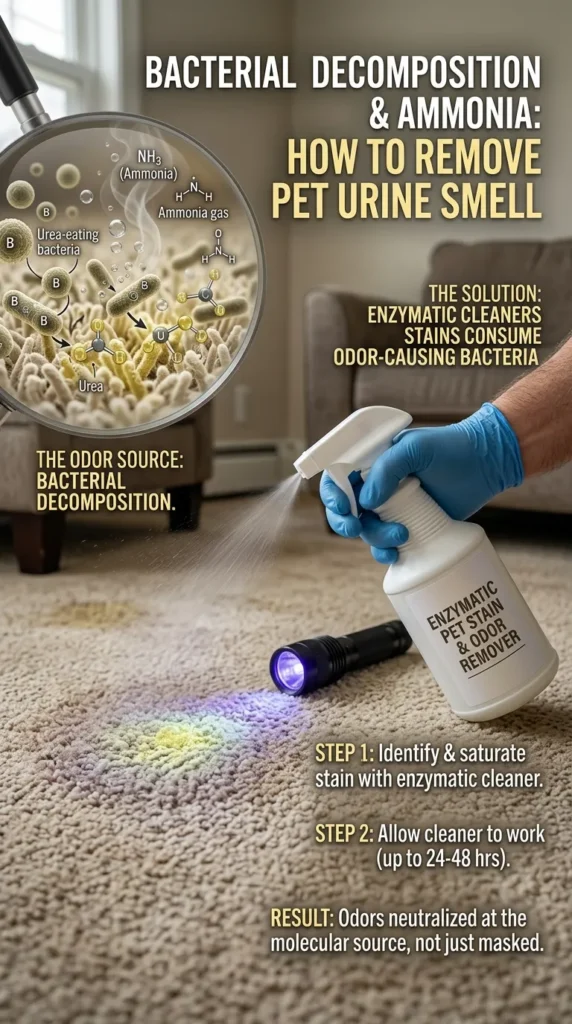
- The Ammonia Stage: Within 2–4 hours, environmental bacteria begin feeding on the urea in the urine, breaking it down into volatile ammonia.
- The Skunk Stage: As time passes and the decomposition process carries on, urine also releases mercaptans — the very same sulfur compounds present in a skunk spray — which is responsible for that particular disgusting odor associated with old stains, their particularly “stale” notes.
3. Evolutionary Concentration
Pets, especially cats, produce highly concentrated urine designed for survival and communication.
- Water Conservation: Descended from desert animals, cats have highly efficient kidneys that extract maximum water, resulting in urine that is up to 10 times more concentrated than a human’s.
- Territorial Markers: Cat urine contains unique proteins like cauxin and amino acids like felinine. These are evolutionarily designed to be long-lasting scent markers that “stick” to surfaces to signal territory to other animals.
4. Porous Infiltration
Urine doesn’t just sit on the surface; its low surface tension allows it to seep deep into porous materials.
- The “Iceberg” Effect: A small visible spot on a carpet often masks a much larger puddle that has soaked into the padding and subfloor.
- Substrate Absorption: Porous materials like concrete, unsealed wood, and grout act like sponges, trapping urine crystals where regular cleaning tools cannot reach.
Step-by-step DIY methods using household staples.
To remove pet urine smell permanently using household staples, you must neutralize the uric acid crystals that cause the odor to return when damp.
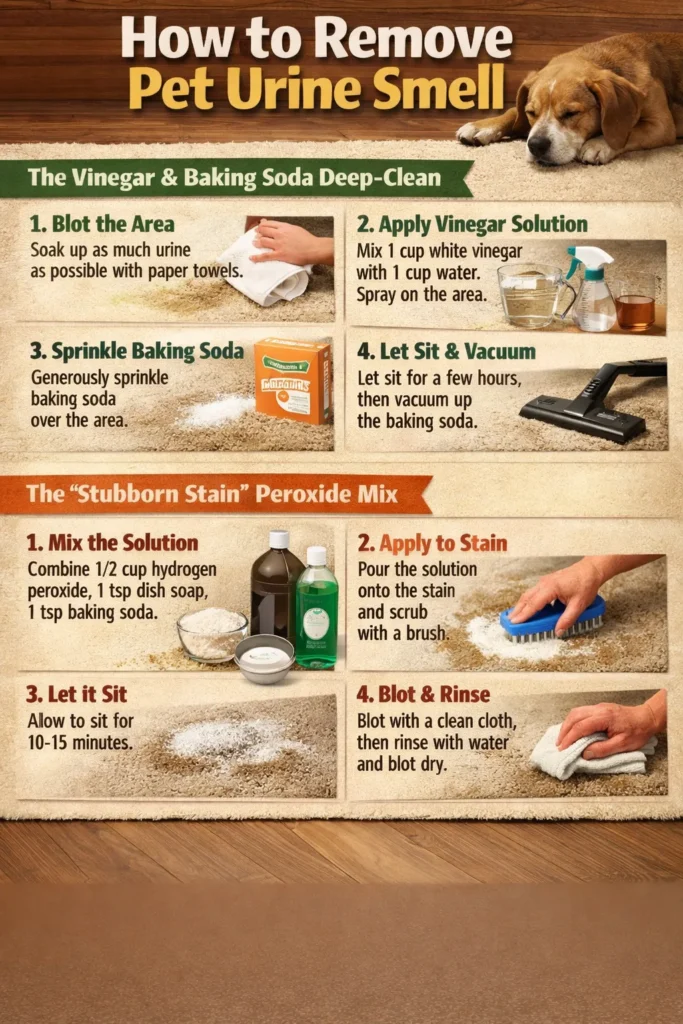
Method 1: The Vinegar & Baking Soda Deep-Clean
This two-stage process uses acid to break down the urine and a base to absorb the remaining odor.
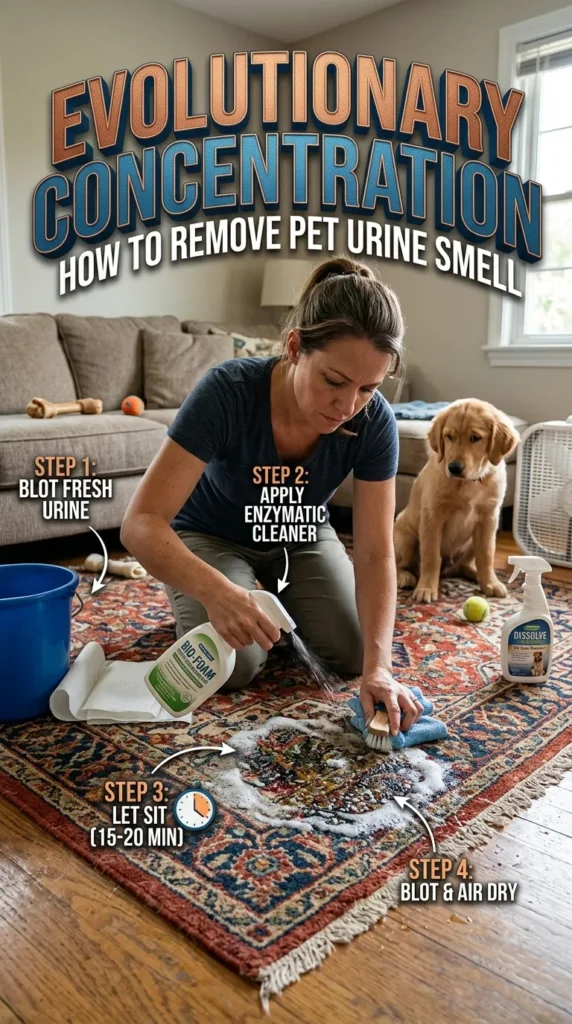
- Blot Immediately: Use paper towels to soak up as much liquid as possible. Stand on the towels to pull moisture from deep within the carpet padding.
- Apply Vinegar Solution: Mix 1 part white vinegar with 1 part cool water. Saturate the area and let it sit for 10 minutes to break down the ammonia.
- Blot Again: Use a clean cloth to remove the excess vinegar solution.
- Deodorize with Baking Soda: While the spot is still damp, sprinkle a generous layer of baking soda over it.
- Wait and Vacuum: Let the baking soda sit until completely dry (ideally 8–12 hours or overnight). Vacuum the residue thoroughly.
Method 2: The “Stubborn Stain” Peroxide Mix
Use this for older or particularly smelly spots. Warning: Test on an inconspicuous area first, as hydrogen peroxide can bleach some fabrics.
- The Recipe: Mix 1 cup 3% hydrogen peroxide, 3 tablespoons baking soda, and 1–2 drops of dish soap.
- The Process:
- Sprinkle baking soda over the area first.
- Pour or spray the peroxide/soap mixture over the powder.
- Gently scrub the mixture into the fibers with a soft brush.
- Let it dry completely before vacuuming.
Surface-Specific Tips
- Hardwood Floors: Use a 1:1 vinegar and water mix for quick cleanup. For set-in smells, dampen a paper towel with 3% hydrogen peroxide and lay it over the spot for a few hours (may cause discoloration).
- Machine-Washable Items: Add 1 cup of white vinegar or 1 pound of baking soda to the regular wash cycle.
- Avoid Heat: Never use steam cleaners or hot water on urine; heat permanently “sets” the odor by bonding the proteins to the fibers.
Permanent Solutions for Tough Odors
| Staple | Function |
|---|---|
| White Vinegar | Neutralizes ammonia and breaks down uric acid. |
| Baking Soda | Absorbs moisture and traps odors at the source. |
| Hydrogen Peroxide | Kills bacteria through oxidation and removes yellow stains. |
| Enzyme Cleaners | Essential for cat urine. If DIY fails, use an enzymatic cleaner (like Nature’s Miracle) to fully digest the uric acid crystals. |
Top 10 -rated enzyme cleaners for 2026.
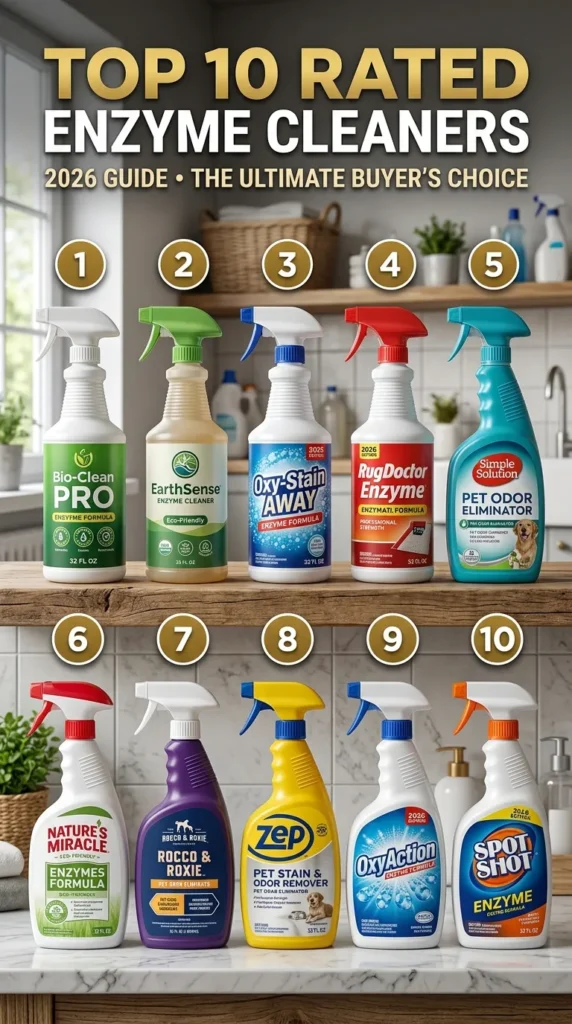
Cat pee has its own proteins, such as cauxin and amino acids, like felinine. These scents are evolutionarily mold-ed to be persistent scent markers that “stick” to surfaces, signaling territory to other animals.
Top 10 Enzyme Cleaners
- Rocco & Roxie Supply Co. Stain & Odor Eliminator (Best Overall): Regularly rated no. 1 for its professional-strength formula It is CRI (Carpet and Rug Institute) certified and can be used safely on carpeted surfaces, upholstery, and hard floors.
- Bubba’s Rowdy Friends Pet Stain & Odor Terminator: Very effective for both fresh and old stains. It contains a multi-strain probiotic blend that keeps on working well after application to prevent re-marking.
- Nature’s Miracle Urine Destroyer Plus: Named “Best Budget” for 2026 This particular “Plus” formula, which is more powerful than their regular version, is intended to neutralize the yellow sticky urea and uric acid in pet urine.
- Biokleen Bac-Out Stain & Odor Remover: The leading natural, plant-based choice. It uses live enzyme cultures while extracts of citrus, thus making it perfect for homes and laundry use sensitive to the environment.
- Angry Orange Pet Odor & Stain Remover: Best for immediate odor neutralization. It’s made with a potent citrus scent and an enzymatic base to kill odors in kennels, yards, and indoor surfaces.
- Simple Solution Extreme Stain & Odor Remover: Features 3X “pro-bacteria” cleaning power. It has been specifically designed to address high frequency marking areas: It contains blockers to the pheromones that draw pets back to repeat visits to the same area.
- Skout’s Honor Pet Stain & Odor Remover: A top eco-friendly pick that utilizes a proprietary “Bio-Kore” technology to break down stains. It is noted for being highly effective at nullifying scents quickly.
- Bactador Odour and Stain Remover: A popular European-rated biological cleaner that uses microbiological enzymes. It is frequently used for pet environments like cages and litter box areas as well as household surfaces.
- Prozyme Biological Odour Remover: A professional-grade neutralizer that specializes in severe cases, such as “last ditch” attempts on carpets soaked in urine. It is safe for natural fabrics like wool.
- OdorZyme Concentrate: Giovanni’s MyClariteen-11 (a specialty mix of naturally occurring micro-organisms) is a European rated biological cleaner; uses microbiological enzymes. It is often used for pet surroundings such as cages and litter box areas and surfaces around the house.
Quick Comparison Guide
| Cleaner [2, 16] | Best Feature | Surface Compatibility |
|---|---|---|
| Rocco & Roxie | Reliability & CRI Certified | Most surfaces (Carpet, Wood, Tile) |
| Bubba’s Rowdy Friends | Set-in Stains | Deep carpet, concrete, artificial turf |
| Nature’s Miracle Plus | Affordability | Standard water-safe surfaces |
| Biokleen Bac-Out | Eco-friendly/Laundry | Fabrics, rugs, and machine wash |
| Angry Orange | Heavy-duty Odors | Yards, kennels, and basements |
Specific strategies for different surfaces (Carpet vs. Hardwood).
A pro-level neutralizer known for extreme cases, such as “last ditch” rescue on carpets saturated with urine. For natural fabric such as wool, it is safe.
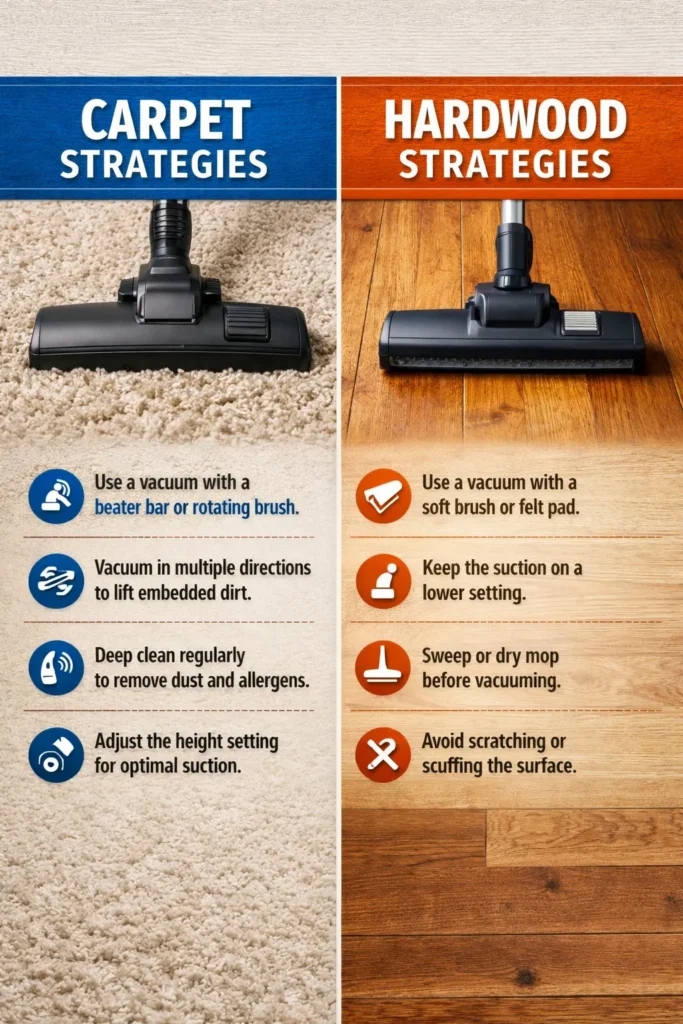
1. Carpet: The “Deep Reach” Strategy
Urine is like an iceberg; what you see on the surface is only 10%. The real smell lives in the carpet backing and foam padding.
- The Compression Blot:Commonly used by removal specialists for highly structural damage or chronic soiling in subfloors and basements. It is an industrial-strength mixture, meant to be diluted for most home uses.
- Over-Saturate: Dealing with carpet and hardwood requires two completely different approaches. Carpet must be saturated to the point the moisture can penetrate into the padding, and hardwood must be kept below a certain level of moisture or it will warp.
- The “Plastic Wrap” Trick: To keep enzymes active longer, cover the wet spot with plastic wrap or a damp towel for 24 hours. This prevents the cleaner from evaporating before it finishes “eating” the uric acid crystals.
- Air Flow: Once the treatment is done, use a floor fan to dry the area quickly to prevent mold or mildew growth in the padding.
2. Hardwood: The “Minimal Moisture” Strategy
Wood is porous. If urine (or cleaner) sits too long, it seeps into the grains and the “tongue-and-groove” joints, causing black stains and permanent rot.
- Immediate Extraction: Use a Wet/Dry Vac immediately to pull liquid out of the cracks between planks.
- Targeted Enzyme Gels: Cover the affected area with a thick pile of paper towels. Put your full body weight on them. This applies pressure to extract liquid from the padding that a vacuum doesn’t reach.
- Hydrogen Peroxide for Black Stains:When you’re applying an enzymatic cleaner, use as much liquid as needed to penetrate the fibers and get down into the subfloor. If the pee penetrated, the cleaner needed to penetrate.
- The Last Resort (Sanding): If the wood has gotten black, you mix and match the oxidized with urine to be in tannins with woods. A soak in 3 percent hydrogen peroxide (apply with a damp cloth) can sometimes lift the color, though be careful — it could strip the finish, too.
Surface Comparison at a Glance
| Feature | Carpet Strategy | Hardwood Strategy |
|---|---|---|
| Primary Goal | Reach the padding | Prevent seepage & warping |
| Volume of Cleaner | High (Saturation) | Low (Mist/Wipe) |
| Dwell Time | 24+ hours (Covered) | 10–15 minutes (Uncovered) |
| Risk Factor | Mold/Padding rot | Wood rot/Buckling |
Pro tips to prevent repeat accidents.
If the smell remains, the urine has probably penetrated to the unfinished underside of the wood. You might have to sand the area down and reseal it with an oil-based primer (such as KILZ) to capture the odor.
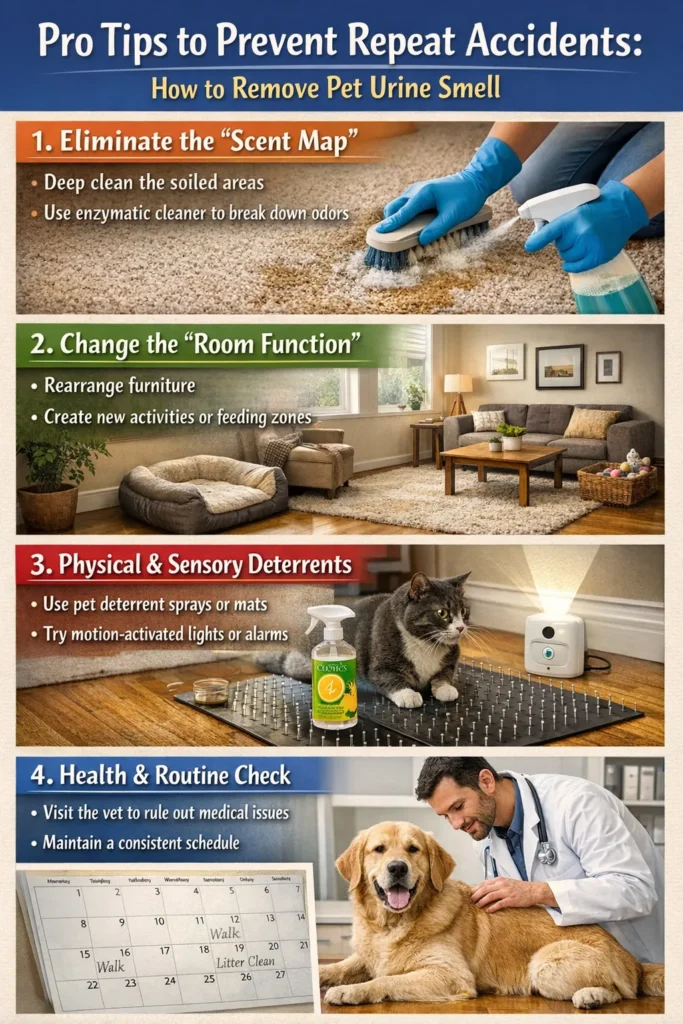
1. Eliminate the “Scent Map”
- Neutralize, Don’t Mask: Never use ammonia-based cleaners (like Windex). Ammonia is a component of urine; to a pet, it smells like an invitation to “top off” the scent.
- The Blacklight Audit: Use a 365nm UV light to spot old, dry spots that you have missed. Your pet can, even if you can’t smell them.” Use a good enzymatic cleaner on all pearls.
- Pheromone Blockers: Consider products such as Feliway (for cats) or Adaptil (for dogs). These diffusers emit calming synthetic pheromones that inhibit the anxiety-driven “marking” reflex.
2. Change the “Room Function”
Pets rarely soil where they eat or sleep.
- Feeding Strategy: Once the spots are cleaned, put food bowls or treats directly on these “trouble spots.” This redesignates the area as a kitchen, which causes them to instinctually avoid soiling there.
- Play Zone: Spend 10 minutes a day playing with your pet on the previous accident site. Incorporating “positive territory” vibes helps break the bathroom habit.
3. Physical & Sensory Deterrents
- Texture Aversion: Protect cleaned areas with aluminum foil, double-sided sticky tape or a plastic carpet runner (nubs facing up). The unpleasant feeling under their paws will deter them from staying long.
- Scent Deterrents: Lightly mist the area with citrus, eucalyptus, or peppermint oils diluted in water. Most pets find these smells offensive and will steer clear.
4. Health & Routine Check
- Rule Out UTIs: If a house-trained pet suddenly starts having accidents, visit the vet. Urinary Tract Infections or crystals can make it impossible for them to “hold it.”
- The “Enzyme Soak” for Laundry: If they pee on bedding, soak the item in a mix of 1 cup vinegar and 1/4 cup enzymatic cleaner before putting it into the wash; standard detergent won’t kill the uric acid and the smell survives the dryer.
Pro Comparison: Deterrent Methods
| Method | Best For | Pros | Cons |
|---|---|---|---|
| Aluminum Foil | Cats / Soft Surfaces | Immediate results | Noisy and unsightly |
| Citrus Sprays | Dogs / Hard Floors | Smells fresh to humans | Needs frequent re-application |
| Food Placement | Chronic “Spot” Marking | Permanent habit shift | Only works for one specific spot |
| Enzymatic Deep Soak | Any porous surface | Removes the root cause | Requires 24-48 hours to dry |
FAQ
- Can vinegar really remove old cat urine smells? Yes, it breaks down alkaline salts, but for permanent removal, follow up with an enzyme cleaner.
- What is the best enzyme cleaner for 2026? Look for brands containing live bacteria cultures specific to uric acid.
- Why does my house smell like pee even after cleaning? Uric acid crystals stay dormant until humidity hits them, reactivating the smell.
- Is it safe to use bleach on pet urine? No. Mixing bleach with the ammonia in urine can create toxic fumes.
- How do I find a hidden urine stain? Use a UV blacklight in a dark room; urine will glow neon yellow or green.
- Can I use a steam cleaner on dog pee? Avoid heat initially, as it can “set” the protein in the stain permanently into the fibers.
- How long does it take for enzyme cleaners to work? Typically 24–48 hours as the bacteria “digest” the odor.
- Will baking soda hurt my carpet? It is safe but must be vacuumed thoroughly to prevent residue buildup.
- How do I stop my pet from peeing in the same spot? Use an enzymatic cleaner to remove the “scent marker” that tells them it’s a bathroom.
- Is dried urine harder to clean than fresh? Yes, because it has bonded with the material, requiring deep saturation to break it down.
- Are natural remedies as good as chemical ones? For light odors, yes; for deep-set cat spray, professional enzymes are usually required.
- What should I do if the smell is in the floorboards? You may need to sand and reseal the wood or use a specialized subfloor odor sealer.
Final Verdict
Getting rid of pet odors doesn’t have to be a never-ending battle. The answer to how to get rid of pet urine smell, though, is not through just surface cleaning — you need to tackle the biological components of the stain. Thanks to the emergence of high-efficiency enzyme cleaners and smart DIY hygiene practices, keeping a home pristine is easier than ever in 2026. Whether you’re a first-time pet owner or an old pro, it takes patience — allowing the products to do their job deep inside the fibers.
This is why we, at PetsCareX believe a clean home equals a healthy pet and happy owner. This isn’t just covering up a smell; it’s sanitizing your home and protecting those flooring investments by using this guide. Keep in mind, if the smell remains, dig deeper — literally — into the padding or subfloor. If you have the right tools (and a blacklight) and follow the processes listed above, you may be able to dispense with bad odors in your home for good. Keep following your Pet Hygiene Tips, and you can enjoy a clean safe haven in your home for you as well as your pets.


Leave a Reply