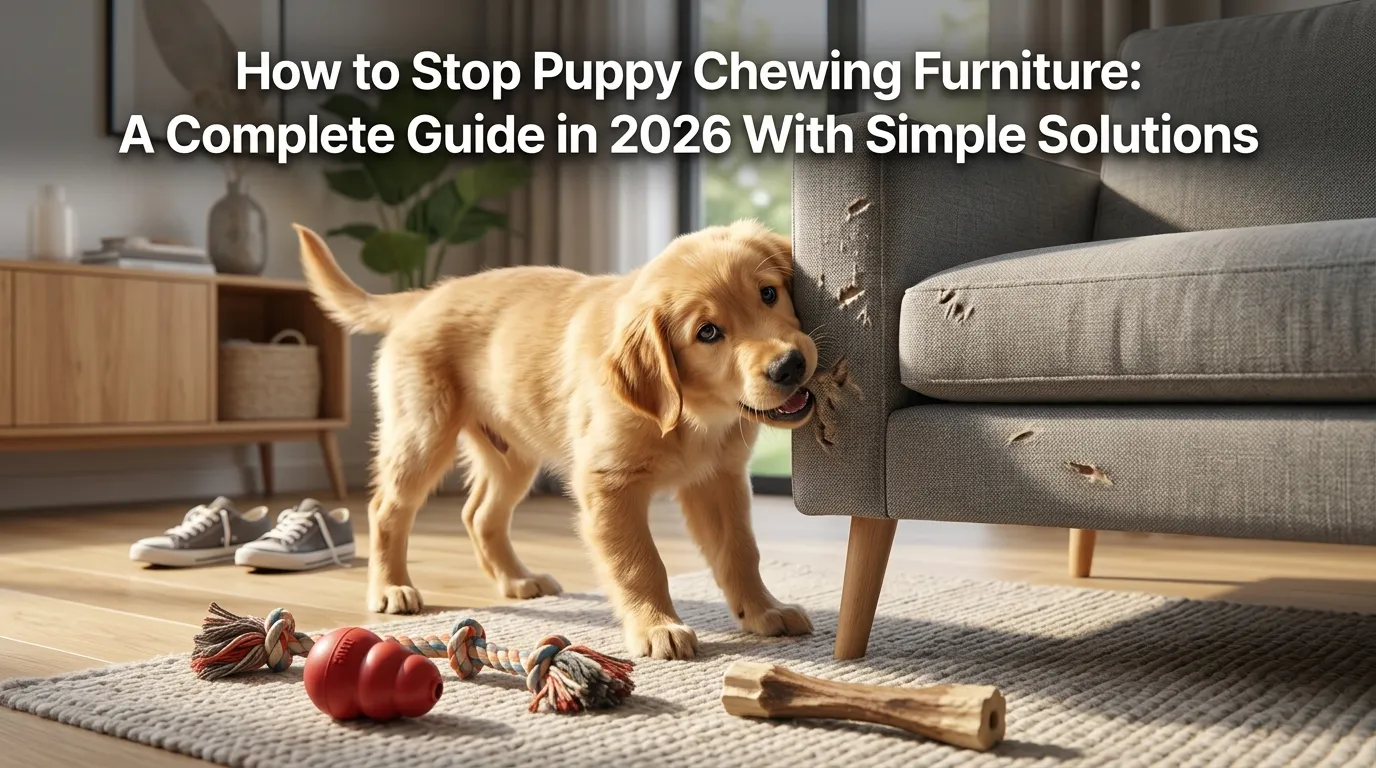
Returning to a shredded sofa or gnawed chair leg is the nightmare every new pet parent knows all too well. You adore your new pal, but the inside of your home is suffering. “How to stop puppy chewing furniture” is one of the most searched questions for a reason: puppies explore their world with their mouths, and without proper guidance your heirloom coffee table becomes their favorite teething toy.
In this hyperdetailed 2026 guide, we dig into the underlying reasons that may be causing destructive chewing — from teething pain to boredom and anxiety. But we’re not just going to tell you, “Just say no.” We give a clear plan of easy, science-based variations on positive reinforcement and sensory redirection. You will learn how to puppy-proof your home the right way, what chew toys are best rated and actually durable, and what professional grade deterrent or repellents are safe but effective for your furry friends. By the end of this guide, you’ll have a straightforward, actionable plan to save your furniture while keeping your puppy happy, healthy and entertained. Your house can be beautiful and pet-friendly.
In This Complete Guide, You’ll Discover:
- The psychological “Why” behind destructive chewing in 2026.
- Step-by-step redirection techniques that work in days.
- Top-rated DIY and commercial anti-chew sprays.
- The best “long-lasting” chew alternatives for different breeds.
- How to create a “Chew-Safe” zone in your house.
Understanding the “Mouth-First” Phase
The best way to know how to stop puppy chewing furniture is by understanding the biology behind what we call the “Mouth-First” phase. For a puppy, their mouth is the main instrument with which they navigate the world — all three combined: their hands, eyes and sense of touch.
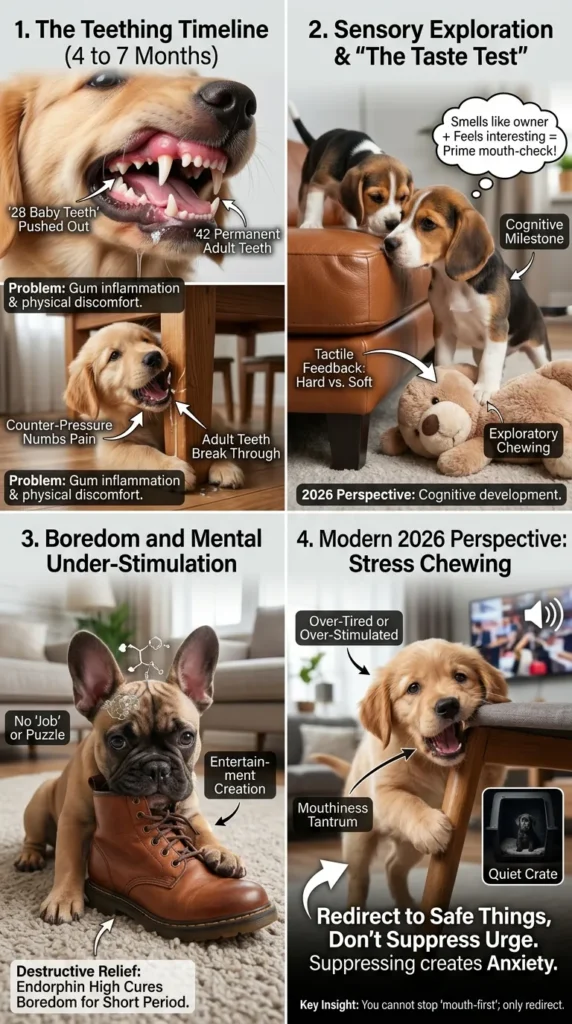
1. The Teething Timeline (4 to 7 Months)
Like human infants, puppies experience a brutal teething phase. Their 28 baby teeth are pushed out, between the ages of 16 and 24 weeks, by 42 permanent adult teeth.
- The Problem: This causes significant gum inflammation and physical discomfort.
- The “Mouth-First” Solution: Gnawing on hard surfaces, like the wooden legs of a dining table, provides counter-pressure that numbs the pain and helps adult teeth break through the gums.
2. Sensory Exploration & “The Taste Test”
Puppies are naturally curious. In 2026, pet behaviorists emphasize that “exploratory chewing” is a cognitive milestone.
- Tactile Feedback: A puppy chews your leather sofa because it feels different from their plush toy.
- The “Mouth-First” Logic: If it smells like you (the owner) and feels interesting, it is a prime candidate for a “mouth-check.”
3. Boredom and Mental Under-Stimulation
If a puppy isn’t given a “job” or a puzzle, they will create their own entertainment.
- Destructive Relief: Chewing triggers a release of endorphins in a dog’s brain. In such situations, chewing what they can find on the carpet brings them a feel-good chemical high that cures their boredom for a short period of time.
4. Modern 2026 Perspective: Stress Chewing
Recent research has shown that “mouthiness” is frequently a sign of a puppy being over-tired or over-stimulated. Just as a toddler throws a tantrum, there’s no telling when a puppy might then start chewing furniture frantically when he really needed a nap in a quiet crate.”
Key Insight: You cannot go into a state of “stopping” mouth-first; you can only redirect it toward safe things. Trying to suppress the urge altogether often exacerbates anxiety and creates repressive
Immediate Deterrents (The Quick Fixes)
While long-term training is the ultimate objective, immediate deterrents are meant to be a “first line of defense” against your puppy doing permanent damage to your home today. These band-aids function by rendering furniture physically out of reach or sensory-unappealing.
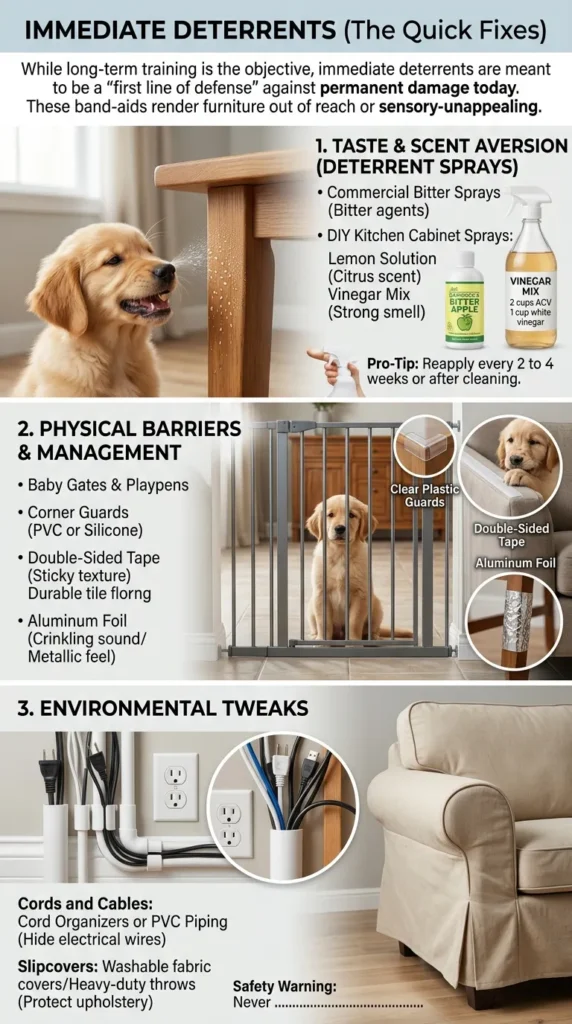
Taste & Scent Aversion (Deterrent Sprays)
The most common way to stop a puppy from biting a specific spot is to apply a safe but foul-tasting substance.
- Commercial Bitter Sprays: These products, such as Grannick’s Bitter Apple or Emmy’s Best Anti-Chew, contain bitter agents (usually denatonium benzoate) that are safe but taste horrible to dogs.
- DIY “Kitchen Cabinet” Sprays:
- Lemon Solution: Rubbing lemon peel directly onto wood or diluted one part lemon juice to five parts water can take chewing away due to sharp citrus scent.
- Vinegar Mix: 2 Cups of Apple Cider/Vinegar to 1 Cup white vinegar. Although it smells stronger to humans, it’s often more successful than lemon with resistant chewers.
- Pro-Tip: Reapply these sprays every 2 to 4 weeks or after cleaning, as the effectiveness fades once the scent disappears.
Physical Barriers & Management
If a puppy cannot reach the furniture, they cannot chew it.
- Baby Gates & Playpens: Use these to restrict your puppy to a “safe zone” with tile or laminate floors, away from expensive wooden tables or upholstered sofas.
- Corner Guards & Tape:
- Clear Plastic Guards: Stick-on PVC or silicone guards (often used for childproofing) can be placed on sharp table corners to deter gnawing.
- Double-Sided Tape: Dogs really hate sticky textures on their paws and muzzles. Lining the edges of rugs or sofa arms with double-sided tape often turns them off immediately.
- Aluminum Foil: Covering furniture legs in foil can be temporary, since the crinkling sound and metallic feel is new and therefore negative for most puppies.
Environmental Tweaks
- Cords and Cables: Use cord organizers or PVC piping to hide electrical wires. A teething puppy chewing a live wire is a major fire and safety hazard.
- Slipcovers: Washable fabric covers or heavy-duty throws can protect upholstery from drool and minor nibbling while you are training.
Safety Warning: Never use spicy deterrents like hot sauce or cayenne pepper without consulting a vet.
The Redirection Method (Core Training)
The entire reason why 2026 puppy training revolves around the Redirection Method. Rather than simply saying “No” to your dog, you are showing them “Not this, but that. This creates a win-win situation and allows the puppy to make good choices on his own.
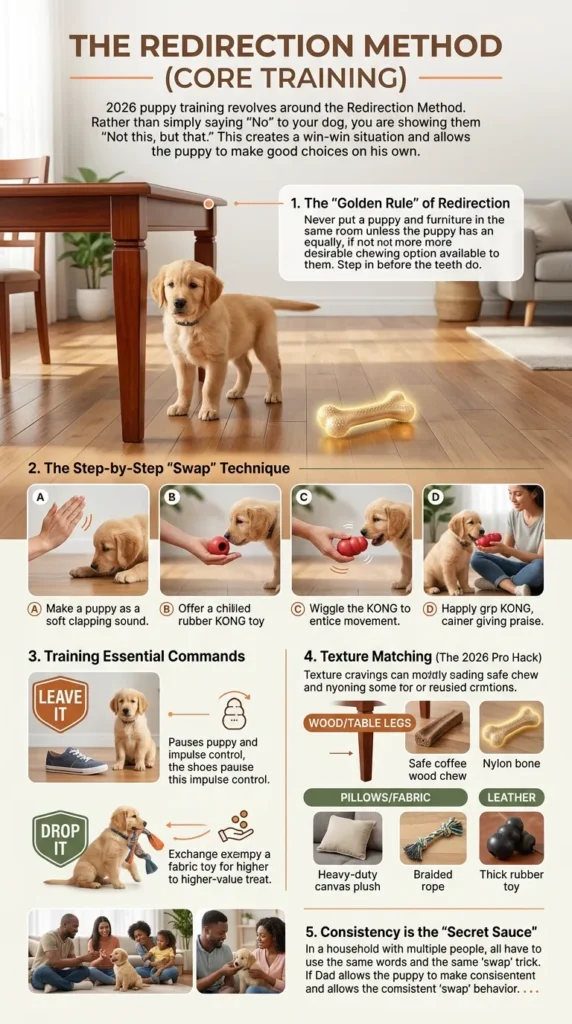
1. The “Golden Rule” of Redirection
Never put a puppy and furniture in the same room unless the puppy has an equally, if not more desirable chewing option available to them. If you see them eyeing the mahogany table leg, you have to step in before the teeth do.
2. The Step-by-Step “Swap” Technique
- Step A: Catch the Intent. Catch the Intent. As soon as your puppy sniffs or licks a peice of furniture, make a negating sound to them (a soft clap or “kissing” noise) Don’t yell — that tends to start what I call “anxiety chewing.”
- Step B: The Offer. Immediately present a high-value toy (like a chilled rubber KONG or a textured nylon bone).
- Step C: The Engagement. Wiggle the toy to make it seem “alive.” Puppies are attracted to movement.
- Step D: The Reward. Once the puppy puts the toy in their mouth, praise them calmly:
3. Training Essential Commands
To stop chewing long-term, your puppy needs a vocabulary. Focus on these two 2026 industry-standard commands:
- “Leave It”: Used before they touch the furniture. It teaches impulse control.
- “Drop It”: Typically used as they already have a cushion or rug corner in their mouth. Always exchange the “illegal” item for something with high value so that way the puppy doesn’t feel like they’re losing.
4. Texture Matching (The 2026 Pro Hack)
Puppies often chew specific furniture because they crave a certain mouthfeel. Use this to your advantage:
- Chewing Wood/Table Legs? Offer a safe coffee wood chew or a sturdy nylon bone with a wood-like texture.
- Chewing Pillows/Fabric? Offer a heavy-duty canvas plush toy or a braided rope.
- Chewing Leather? Offer a thick rubber toy that provides similar resistance.
5. Consistency is the “Secret Sauce”
In a household with multiple people, all have to use the same words and the same “swap” trick. If Dad allows the puppy to chew on the ottoman but Mom says no, the puppy gets confused and the behavior becomes that much harder to curb.
Pro-Tip: If your puppy does not stop (runs back to the furniture) they are probably
Top 10 Product Recommendations 2026
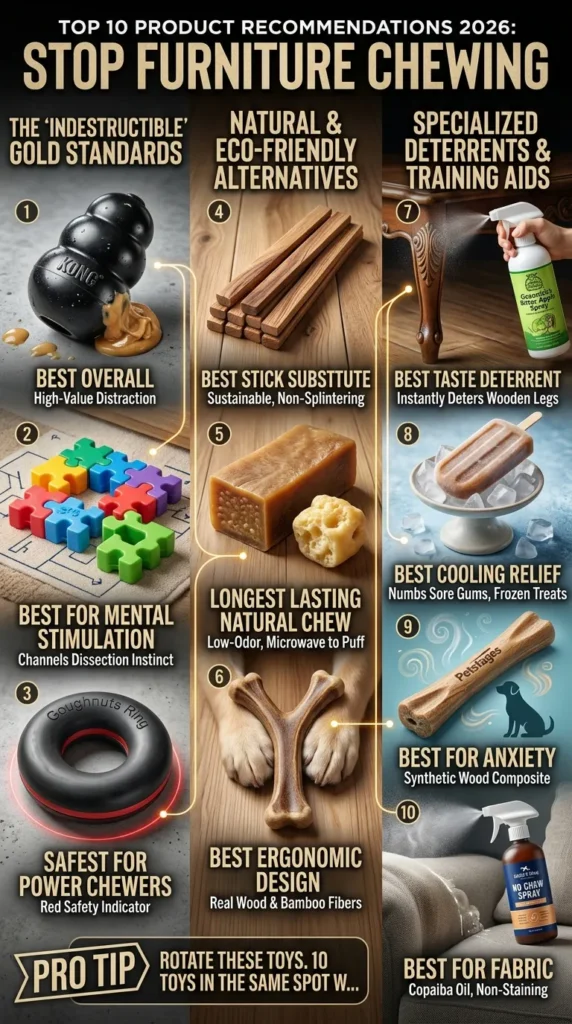
To protect your home properly, you need a combination of high-durability toys and effective sensory repellents. Here are the top 10 products to stop furniture chewing based on 2026 expert testing and vet recommendations.
The “Indestructible” Gold Standards
- KONG Extreme Dog Toy (Best Overall): The black rubber version is the toughest out there. Loaded with frozen peanut butter or yogurt, it’s a high-value distraction that can keep puppies away from furniture for hours.
- K9 Connectables (Best for Mental Stimulation): These award-winning puzzle toys are designed to be stacked together, allowing you to increase the difficulty. They channel a puppy’s “dissection instinct” away from sofa cushions and onto a safe, rewarding challenge.
- Goughnuts Ring (Safest for Power Chewers): Designed by engineers of rubber, these rings come with a layer called the “safety indicator” — if your dog reaches the red center when chewing, you know it’s time to replace.
Natural & Eco-Friendly Alternatives
- Coffee Wood Sticks (Best Stick Substitute): A top trend of 2026, these sturdy, sustainable coffee wood sticks don’t splinter the way regular old backyard sticks do. They are very useful for puppies that have a taste for wooden chair legs.
- Himalayan Yak Chews (Longest Lasting Natural Chew): These super-tough blocks of cheese are also low-odor. Microwave the end of the chew as it gets too small to be safe to chew, and those also puff into a crunchy treat.
- Bamboodles T-Bone (Best Ergonomic Design): Made with real wood and bamboo fibers, the “Y” shape is simple for puppies to keep between their paws, which creates a stable surface for aggressive gnawing.
Specialized Deterrents & Training Aids
- Grannick’s Bitter Apple Spray (Best Taste Deterrent): Still the highest rated deterrent for 2026. Spray it on wooden legs or fabric corners to establish an instant “no-go” zone for your puppy’s mouth.
- Woof Pupsicle (Best Cooling Relief): This teething solution features a refillable frozen treat system that numbs sore gums while giving pupsters a durable rubber surface to chew on.
- Petstages Dogwood Calming Chew (Best for Anxiety): This chew links the smell of actual wood to a synthetic, non-splintering composite that is safer and can be soothing on those dogs who compulsively gnaw furniture when nervous.
- Rocco & Roxie No Chew Spray (Best for Fabric): An alcohol-free formula infused with calming copaiba oil that won’t stain your furniture or irritate your puppy’s skin.
Pro Tip: Always rotate these toys. However, 10 toys in the same spot will become old news for a puppy and back to your “new” furniture. And only set out 2 or 3 at a time to lead.
The “Golden Rule” of Puppy Exercise
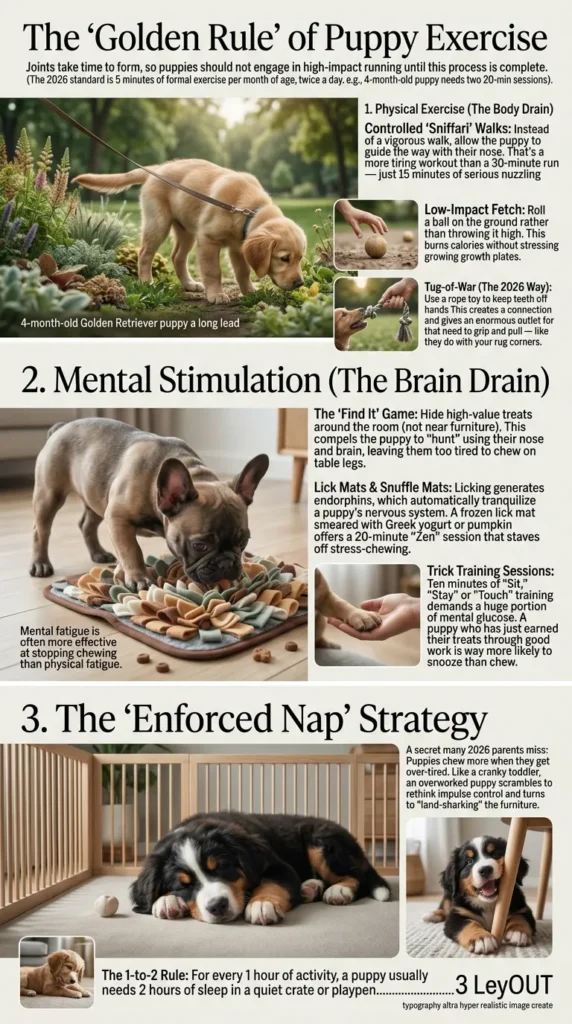
Joints take time to form, so puppies should not engage in high-impact running until this process is complete. (The 2026 standard is 5 minutes of formal exercise per month of age, twice a day.) (e.g., 4-month-old puppy needs two 20-min sessions).
1. Physical Exercise (The Body Drain)
- Controlled “Sniffari” Walks:Instead of a vigorous walk, allow the puppy to guide the way with their nose. That’s a more tiring workout than a 30-minute run — just 15 minutes of serious nuzzling
- Low-Impact Fetch: Roll a ball on the ground rather than throwing it high. This burns calories without stressing growing growth plates.
- Tug-of-War (The 2026 Way): Use a rope toy to keep teeth off hands This creates a connection and gives an enormous outlet for that need to grip and pull — like they do with your rug corners..
2. Mental Stimulation (The Brain Drain)
Mental fatigue is often more effective at stopping chewing than physical fatigue.
- The “Find It” Game: Hide high-value treats around the room (not near furniture). This compels the puppy to “hunt” using their nose and brain, leaving them too tired to chew on table legs.
- Lick Mats & Snuffle Mats: Licking generates endorphins, which automatically tranquilize a puppy’s nervous system. A frozen lick mat smeared with Greek yogurt or pumpkin offers a 20-minute “Zen” session that staves off stress-chewing.
- Trick Training Sessions: Ten minutes of “Sit,” “Stay” or “Touch” training demands a huge portion of mental glucose. A puppy who has just earned their treats through good work is way more likely to snooze than chew.
3. The “Enforced Nap” Strategy
A secret many 2026 parents miss: Puppies chew more when they get over-tired. Like a cranky toddler, an overworked puppy scrambles to rethink impulse control and turns to “land-sharking” the furniture.
- The 1-to-2 Rule: For every 1 hour of activity, a puppy usually needs 2 hours of sleep in a quiet crate or playpen.
Sample 2026 Daily Routine for a 4-Month-Old Puppy
| Time | Activity | Goal |
|---|---|---|
| 7:00 AM | Quick Walk + Sniffing | Physical Drain |
| 7:30 AM | Breakfast in a Slow Feeder/Puzzle | Mental Drain |
| 8:30 AM | Enforced Nap (Crate/Pen) | Prevention |
| 12:00 PM | 10-Min Trick Training + Play | Engagement |
| 1:00 PM | Frozen Lick Mat | Calming |
| 5:00 PM | Evening “Sniffari” Walk | Final Energy Burn |
| 8:00 PM | High-Value Coffee Wood Chew | Safe Chewing Outlet |
Final Verdict on Exercise: If you find your puppy frantically chewing furniture at 7:00 PM, they likely have “the zoomies.
FAQs
- Why does my puppy only chew furniture when I leave? It’s likely separation anxiety; try crate training or calming pheromones.
- What is the best bitter spray to stop chewing? Bitter Apple is the industry standard in the US/UK.
- Can I use vinegar to stop dog chewing? Yes, a diluted white vinegar mix acts as a natural deterrent.
- At what age do puppies stop chewing everything? Most stop by 6–8 months after adult teeth are fully in.
- Are wooden furniture legs dangerous for puppies? Yes, splinters can cause internal punctures or choking.
- Will more exercise stop the chewing? Often, yes. A tired puppy is a well-behaved puppy.
- Is “scolding” effective for chewing? No, it usually causes fear. Redirection is more effective.
- Should I give my puppy ice cubes for teething? Yes, it numbs the gums and provides a safe “crunch.”
- Can hunger cause chewing? Occasionally; ensure your puppy is on a high-quality 2026-approved diet.
- How do I protect my couch corners? Use heavy-duty corner guards or clear plastic shields.
- Do pheromone diffusers help with destructive chewing? Yes, if the chewing is stress-based.
- Is it okay to give my puppy old shoes to chew? No, this teaches them that footwear is a toy.
Final Verdict
This may be a marathon, NOT a sprint to stop a puppy from chewing furniture. In 2026, the change is to “Environmental Management”— We not only don’t punish the dog, but we also set them up for success. With quality chew-be-gone options and ongoing redirection combined with new age deterring options, you can save your furniture while creating a stronger bond with your pet.
As with all things, consistency is the name of the game; hit them when they are doing it 100% of the time and provide a more attractive alternative to break a habit. Furniture can be replaced, but the foundation of learning is permanent for your puppy. Be patient, stock up on chew toys and enjoy the adventure of puppy parenthood!

Leave a Reply