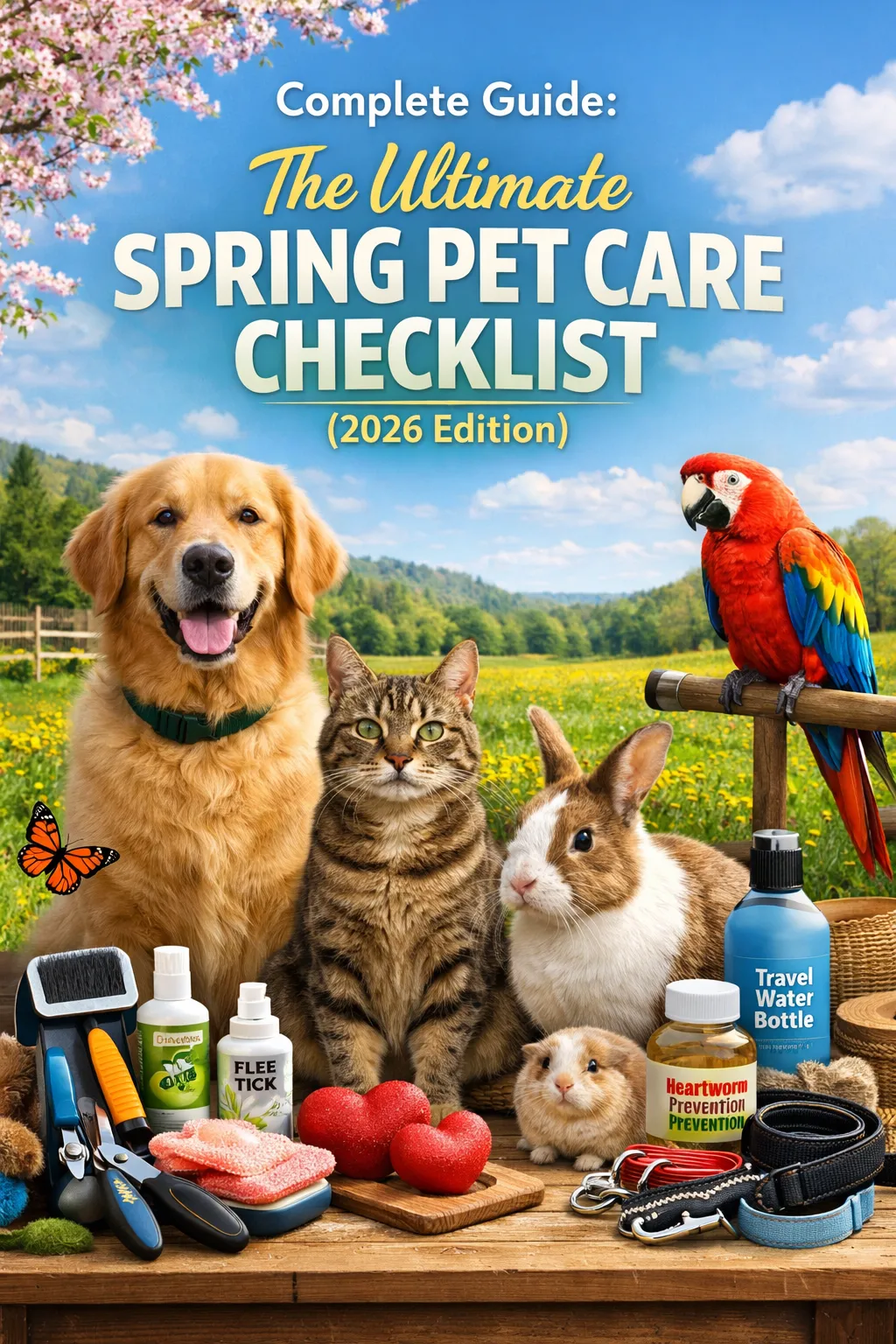
While nice to finally have spring, this “season of renewal” often feels like the “season of perils” to many pet owners. Just as residents of North America and Europe relish in the tulips and warm breezes, our pets are heading outside to greet a new world of emerging parasites and garden toxins lurking in the soil. The problem? The routines used most frequently by owners fail to capture the 2026 transition in climate and pest resistance.
This guide promises: Simply, the definitive, absolute best guide to getting your pet prepared for the new year. Get the lowdown from Simple hygiene hacks to 5-star-rated medical advice in our Spring Pet Care Checklist, your road-map for a worry-free season. At Petscarex.com. At One, we believe pro-active care is the only care, — or at least the only kind of care that does not mean further complications down the road.
In this complete guide, you’ll discover:
- The 2026 “Big Three” Parasite Prevention Strategy.
- A comprehensive list of toxic spring blooms (and pet-safe alternatives).
- Expert grooming techniques to handle the “Great Spring Shed.”
- Advanced yard and home safety audits for active pets.
- Seasonal nutrition adjustments for increased energy levels.
The 2026 “Big Three” Parasite Prevention Strategy (spring pet care checklist)
Dog days of summer no longer just parasite season Across North America, veterinarians are hearing longer parasite cycles, more expansive tick zones, and more developed resistance patterns when it comes to parasites in 2026. And that is why spring prevention has to be multi-layered.
These days, it is not dependent on a single product — it is a Big Three protection strategy:
1.Internal Protection: Heartworm & Mosquito Control
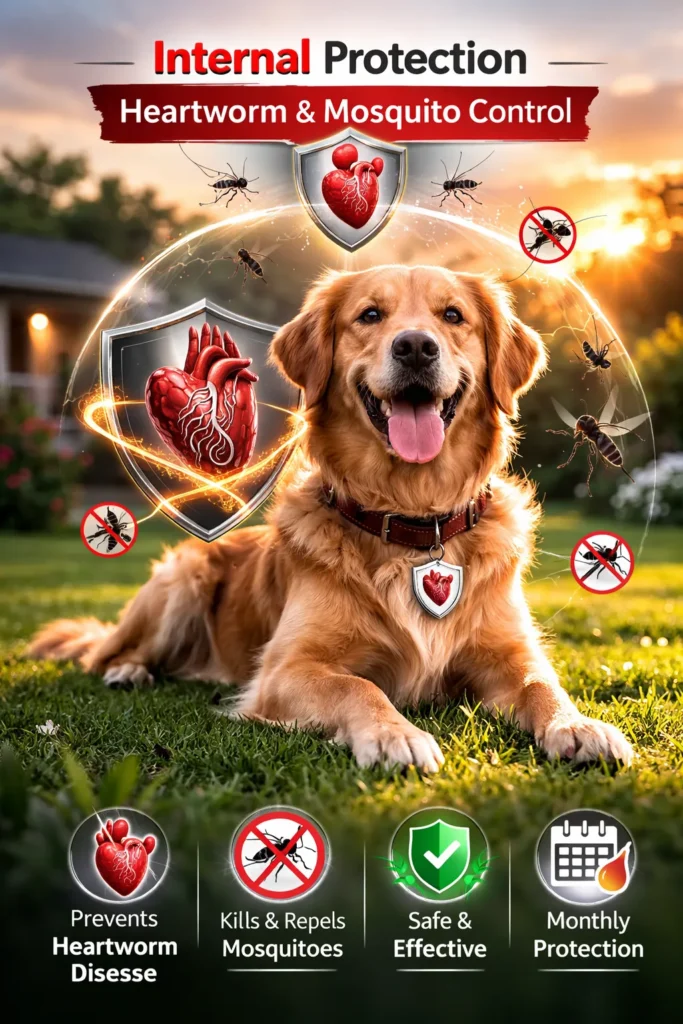
Heartworm disease is transmitted by mosquitoes and has expanded geographically due to warming trends.
Why this matters in 2026:
- Northern states and parts of Canada are seeing longer mosquito seasons.
- Some regions report reduced sensitivity to older preventatives.
- Cats remain untreated if infected — prevention only.
Best practice:
- Annual heartworm testing
- Year-round heartworm preventative (not seasonal anymore)
Veterinary-recommended combination products (Simparica Trio, NexGard Plus, etc.) simplify compliance.
2.External Protection: Fleas & Ticks
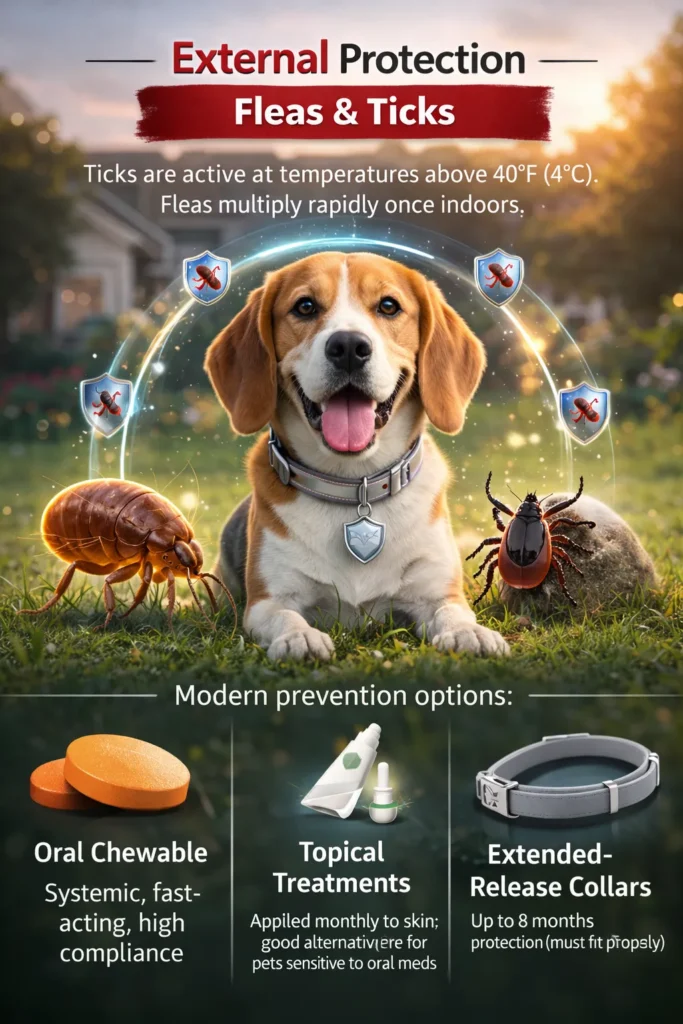
Ticks are active at temperatures above 40°F (4°C). Fleas multiply rapidly once indoors.
Modern prevention options:
Oral Chewable
Systemic, fast-acting, high compliance.
Topical Treatments
Applied monthly to skin; good alternative for pets sensitive to oral meds.
Extended-Release Collars
Up to 8 months protection (must fit properly).
2026 Recommendation:
Provide vet-approved isooxazoline-based product (closeness is contraindicated).
NEVER double-up or supposedly combine preventatives without consulting your veterinarian first. According to ASPCA Poison Control, overdosing is the leading cause of adverse events — not the products themselves.
3.Environmental Control: Yard & Home Defense
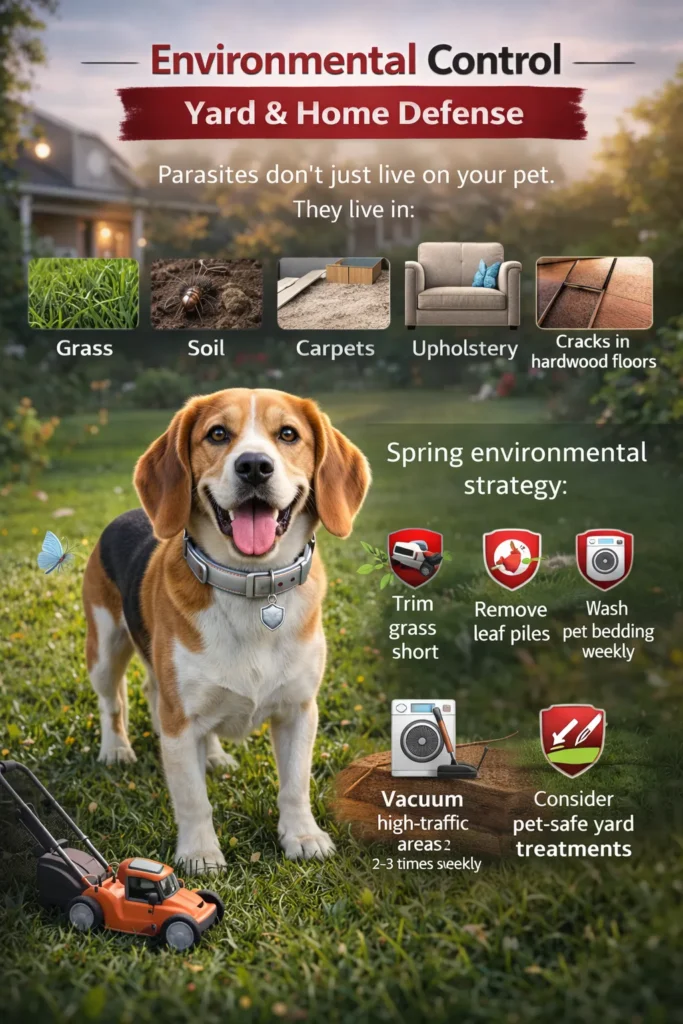
Parasites don’t just live on your pet.
They live in:
- Grass
- Soil
- Carpets
- Upholstery
- Cracks in hardwood floors
Spring environmental strategy:
- Trim grass short
- Remove leaf piles
- Wash pet bedding weekly
- Vacuum high-traffic areas 2–3 times weekly
- Consider pet-safe yard treatments
Prevention works best when internal + external + environmental protection are combined.
Comprehensive List of Toxic Spring Blooms (And Safe Alternatives)
Spring landscaping can be surprisingly dangerous.
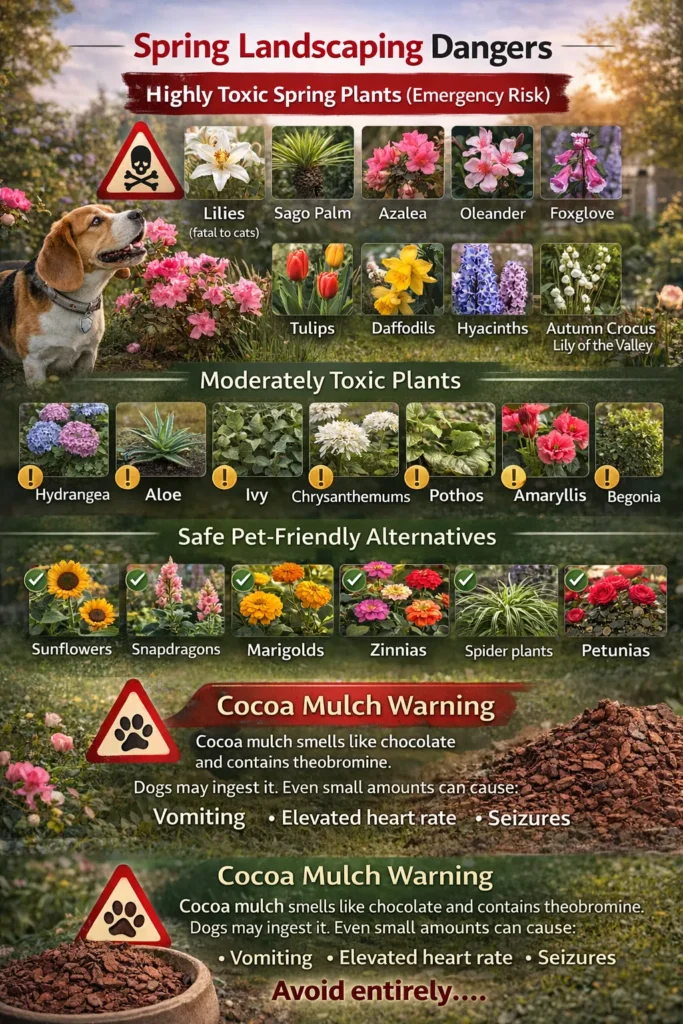
Highly Toxic Spring Plants (Emergency Risk)
- Lilies (fatal to cats)
- Sago Palm
- Azalea
- Oleander
- Foxglove
- Tulips
- Daffodils
- Hyacinths
- Autumn Crocus
- Lily of the Valley
Moderately Toxic Plants
- Hydrangea
- Aloe
- Ivy
- Chrysanthemums
- Pothos
- Amaryllis
- Begonia
- Peony
- Rhododendron
- Boxwood
Safe Pet-Friendly Alternatives
- Sunflowers
- Snapdragons
- Marigolds
- Zinnias
- Spider plants
- Petunias
- Roses (thorn caution)
- Bamboo palm
- Areca palm
- Herbs like basil and rosemary
Cocoa Mulch Warning
Cocoa mulch smells like chocolate and contains theobromine.
Dogs may ingest it. Even small amounts can cause:
- Vomiting
- Elevated heart rate
- Seizures
Avoid entirely.
Expert Grooming Techniques for the “Great Spring Shed”
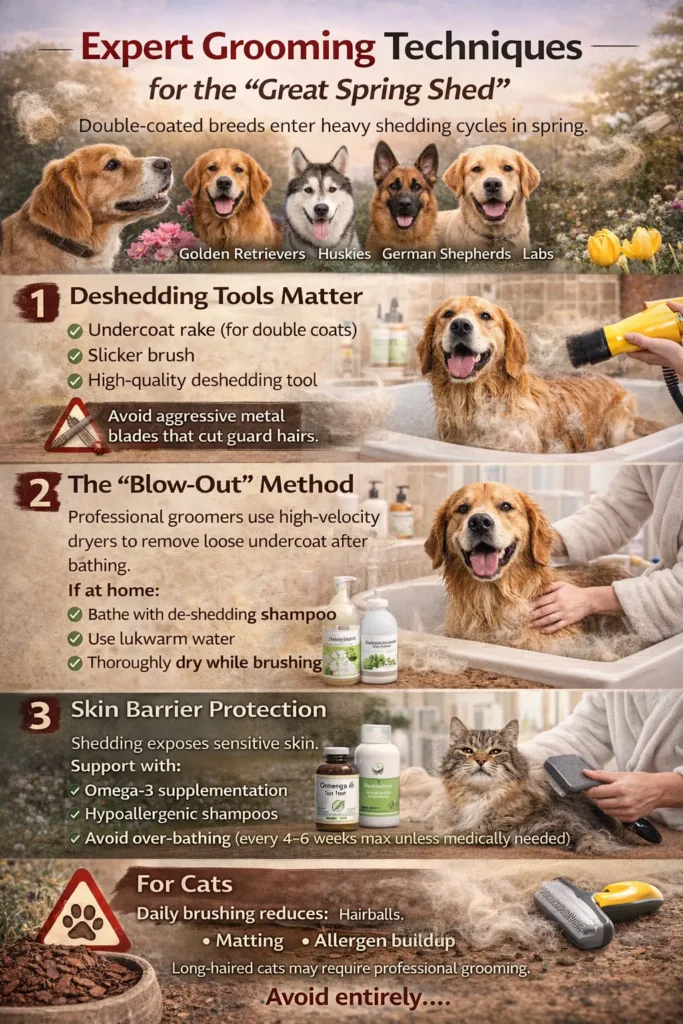
Double-coated breeds enter heavy shedding cycles in spring.
Examples:
- Golden Retrievers
- Huskies
- German Shepherds
- Labs
Step 1: Deshedding Tools Matter
Use:
- Undercoat rake (for double coats)
- Slicker brush
- High-quality deshedding tool
Avoid aggressive metal blades that cut guard hairs.
Step 2: The “Blow-Out” Method
Professional groomers use high-velocity dryers to remove loose undercoat after bathing.
If at home:
- Bathe with de-shedding shampoo
- Use lukewarm water
- Thoroughly dry while brushing
Step 3: Skin Barrier Protection
Shedding exposes sensitive skin.
Support with:
- Omega-3 supplementation
- Hypoallergenic shampoos
- Avoid over-bathing (every 4–6 weeks max unless medically needed)
For Cats
Daily brushing reduces:
- Hairballs
- Matting
- Allergen buildup
Long-haired cats may require professional grooming.
Advanced Yard & Home Safety Audits for Active Pets
Spring increases outdoor time — and injury risk.
Yard Audit Checklist
✔ Check fencing for gaps
✔ Remove sharp debris
✔ Inspect deck boards
✔ Cover pools securely
✔ Store fertilizers locked away
✔ Repair broken gates
Fertilizer & Chemical Risks
High nitrogen fertilizers can:
- Burn paws
- Cause GI upset
- Lead to chemical poisoning if ingested
Choose labeled pet-safe products and wait full absorption before yard access.
Home Audit Checklist
✔ Replace plastic bowls with stainless steel
✔ Secure cleaning products
✔ Store allergy medications safely
✔ Inspect chew toys for wear
✔ Clean HVAC filters (reduces allergens)
Seasonal Nutrition Adjustments for Increased Energy
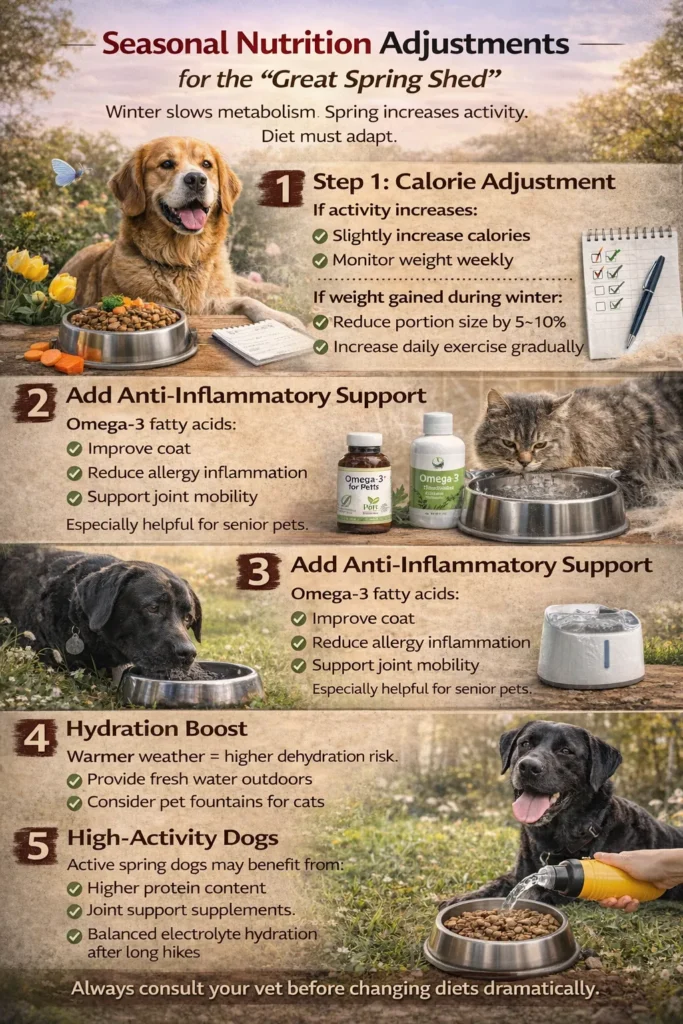
Winter slows metabolism. Spring increases activity.
Diet must adapt.
Step 1: Calorie Adjustment
If activity increases:
- Slightly increase calories
- Monitor weight weekly
If weight gained during winter:
- Reduce portion size by 5–10%
- Increase daily exercise gradually
Step 2: Add Anti-Inflammatory Support
Omega-3 fatty acids:
- Improve coat
- Reduce allergy inflammation
- Support joint mobility
Especially helpful for senior pets.
Step 3: Hydration Boost
Warmer weather = higher dehydration risk.
- Provide fresh water outdoors
- Consider pet fountains for cats
- Add moisture to dry kibble if needed
Step 4: High-Activity Dogs
Active spring dogs may benefit from:
- Higher protein content
- Joint support supplements
- Balanced electrolyte hydration after long hikes
Always consult your vet before changing diets dramatically.
FAQs
- When should I start spring flea and tick prevention in 2026?
- Start as soon as temperatures hit 4°C (40°F) for three consecutive days.
- Are tulips and daffodils really that dangerous for dogs?
- Yes, the bulbs contain concentrated toxins that cause cardiac distress.
- How can I tell if my dog has spring allergies or just dry skin?
- Allergies usually involve licking paws, red eyes, and ear rubbing; dry skin is usually flaky and localized.
- What is the best way to handle heavy spring shedding?
- Use a de-shedding tool like a FURminator and increase bathing frequency to once every 4 weeks.
- Is it safe to use lawn fertilizers with pets?
- Only use “Pet-Safe” labeled products and wait 24–48 hours for the product to dry completely.
- Why does my pet need a heartworm test every spring?
- Giving preventatives to a heartworm-positive pet can cause a fatal anaphylactic reaction.
- What should I put in a spring pet first-aid kit?
- Styptic powder, gauze, saline wash, and a tick-removal tool.
- Can cats get seasonal allergies?
- Yes, feline asthma and skin dermatitis often flare up during high pollen counts.
- How do I prevent my dog from drinking out of puddles?
- Carry a portable water bottle to prevent Leptospirosis infection from stagnant water.
- Is spring a good time for a pet dental cleaning?
- Yes, it aligns with annual wellness exams to clear winter tartar buildup.
- How do I keep my pet calm during spring thunderstorms?
- Use pheromone diffusers, pressure wraps (Thundershirts), or consult your vet about 2026’s newest anxiety medications.
- Should I change my pet’s diet in the spring?
- If their activity level increases significantly, consult your vet about slightly increasing caloric intake or adding joint supplements.
Final Verdict
Getting through the transition into spring takes more than just a longer lead — it takes being proactive. With the hybrid nature of Spring Pet Care wherein health, hygiene, and home safety rules overlap as we have discussed in this Complete Guide: The Ultimate Spring Pet Care Checklist (2026 Edition), that is where your pet wellness resides. By using Simple steps like paw wiping and Top-notch medical solutions like parasite prevention, you are protecting your family from expensive vet bills and heartbreak.
At Petscarex.com. At Owners Circle. Be it the “Great Shed” or checking your garden for poisonous lilies, your dog needs you to always stay on your toes. Spring is about re-birth—not only nature’s—but also your pet’s health basis. Apply this checklist now, ask your vet about 2026 wellness trends, and relish the lovely weather with the knowledge that your best pal is safe, sound, and ready to explore.




Leave a Reply